

Most small blogs don’t fail because the writer is “bad at business.” They fail because the plan is fuzzy, the offers are random, and nothing is tracked until the bank account forces an emergency meeting.
This affiliate marketing case study shows a simple, repeatable framework to reach $1,000/month in 90 days using intent-based content and a few well-chosen affiliate offers. It’s hypothetical but built on plausible conversion math, realistic time limits, and 2026 best practices (helpful content, EEAT signals, and proper disclosures). No magic, no “post once and retire.”
The starting point: tiny blog, limited time, clear constraints
Blog status on Day 1 (assumptions):
- 12 posts live (mixed topics), light traffic
- 20 to 30 organic visits/day (mostly informational)
- No email list, no clear “money pages”
- Time available: 60 to 90 minutes on weekdays, 2 hours on Saturday
- Budget: $0 to $150 (basic tools and a simple email provider)
Goal: $1,000 in the last 30 days of the 90-day sprint (not $1,000 on Day 90 from a single lucky post).
The key constraint is time. So the plan favors fewer, higher-intent pages instead of pumping out 50 shallow articles and hoping Google feels generous.
Offer strategy: pick fewer offers, but pick them like you mean it
We used two “core” offers and one backup:
- Core Offer A (mid-ticket): $60 to $120 commission per sale, product that solves a clear problem
- Core Offer B (low-ticket): $10 to $30 commission, easier yes, helpful for “starter” readers
- Backup offer: same category, used if refunds spike or approval gets delayed
If you need a refresher on the basics of how affiliate programs work, Shopify’s guide is a solid overview: affiliate marketing explained (Shopify).
Example affiliate offer selection rubric (quick scoring)
| Criteria | What “good” looks like | Target |
|---|---|---|
| Payout | Commission matches effort and content type | $50+ for core offer |
| Conversion | Offer fits search intent and is easy to buy | 2% to 5% from click |
| Refunds | Low buyer remorse, clear onboarding, fair terms | Under 10% |
| Cookie window | Enough time for normal decision cycles | 30+ days |
| Proof + support | Real reviews, helpful docs, responsive affiliate team | Strong |
For a deeper checklist-style approach, this is useful background: affiliate offer selection checklist.
The funnel we built (simple on purpose)
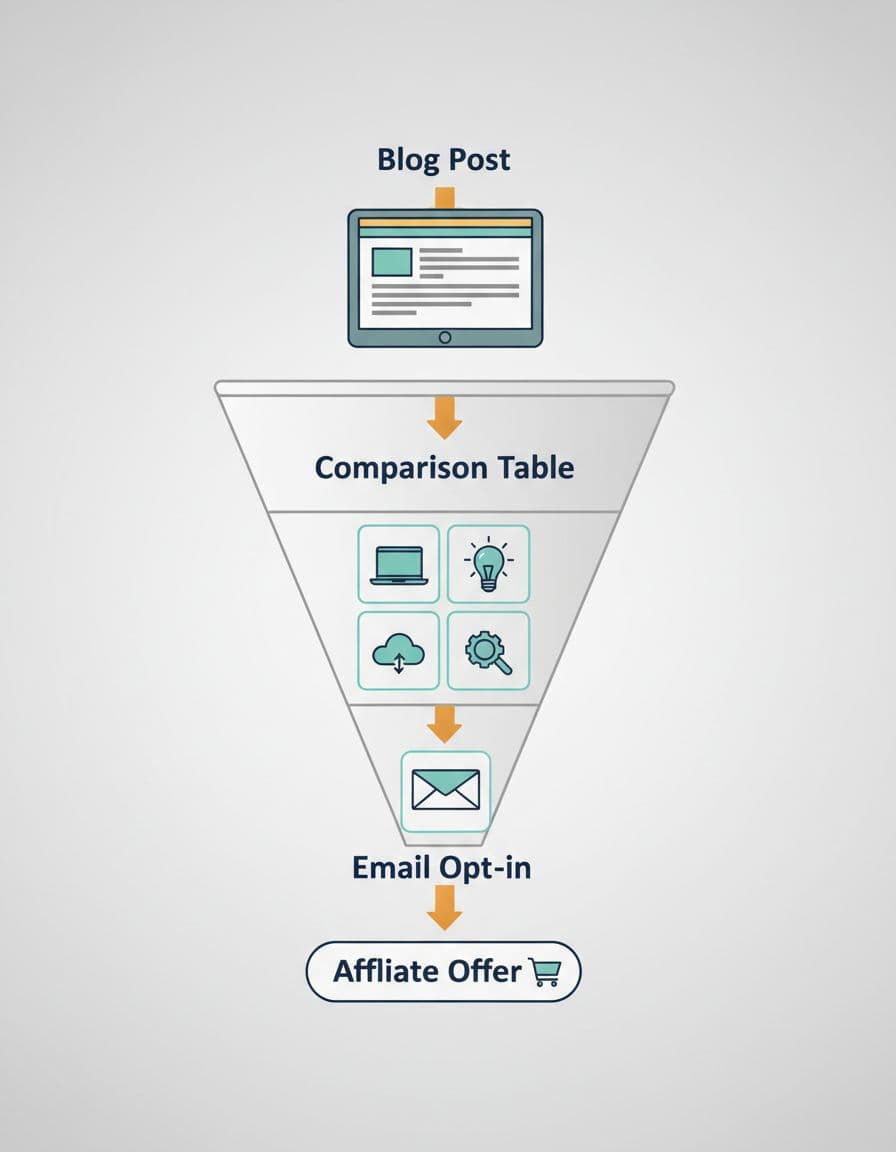
We didn’t “sprinkle links everywhere.” We built a path:
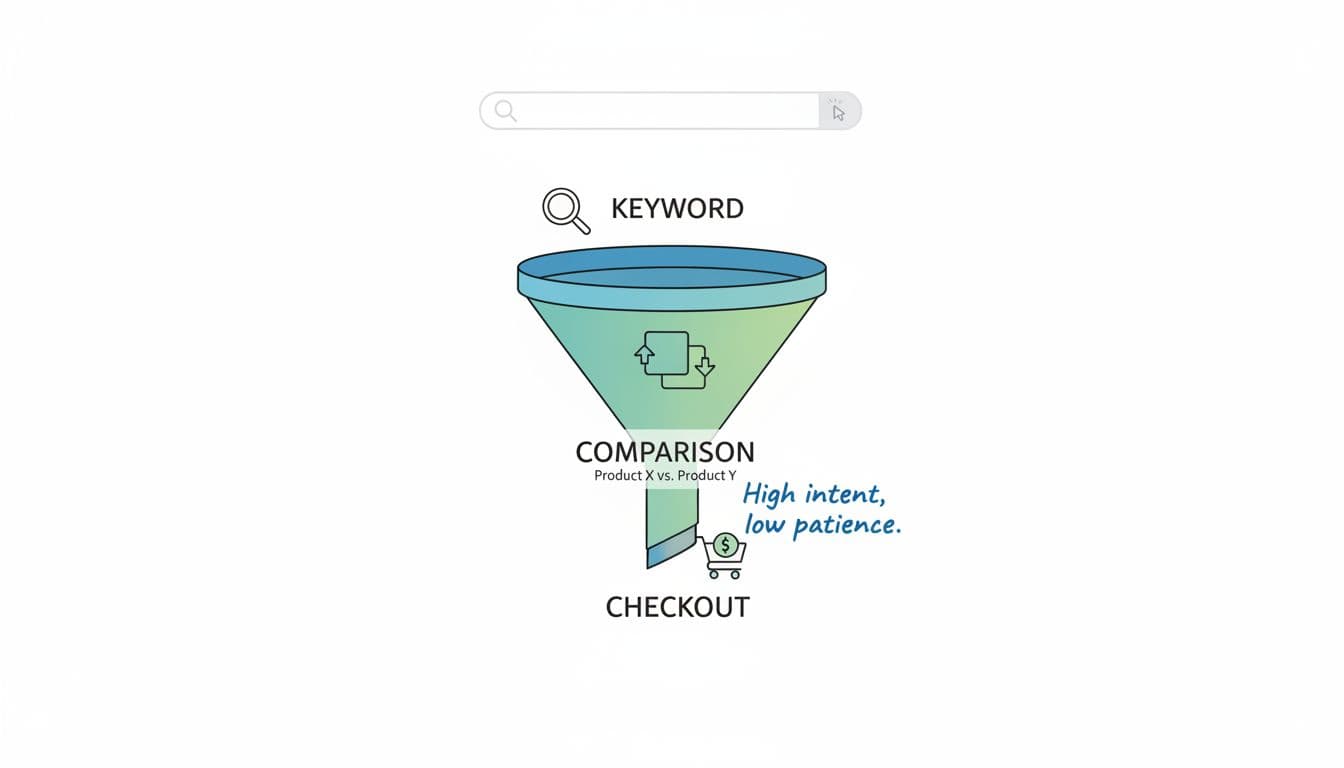
Blog post (intent-focused) → comparison table → email opt-in (optional but helpful) → affiliate offer
The email step matters because many readers aren’t ready today. They’re “researching” today. Your bills, sadly, don’t accept “researching” as payment.
The math behind $1,000/month (no vibes, just numbers)
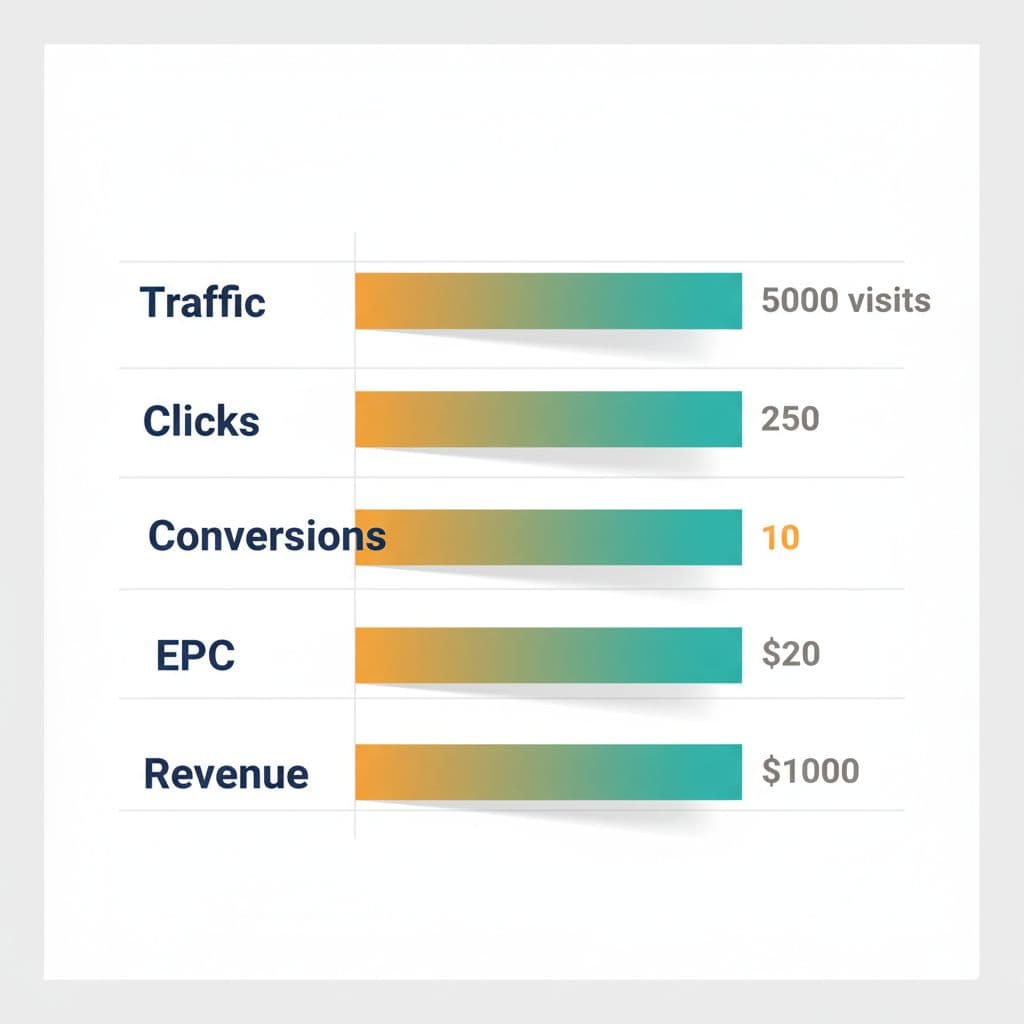
Revenue math is boring, which is why it works:
Monthly revenue = Traffic × affiliate CTR × conversion rate × average commission
Example “Month 3” target:
- Traffic: 8,000 sessions
- Affiliate CTR: 5% (400 outbound clicks)
- Conversion rate: 3% (12 sales)
- Avg commission: $85
8,000 × 0.05 × 0.03 × $85 = $1,020
Those rates aren’t guaranteed, but they’re not fantasy either when the content matches intent and the offer solves the exact problem the searcher has.
The 90-day action plan (Weeks 1–13) plus a simple weekly report
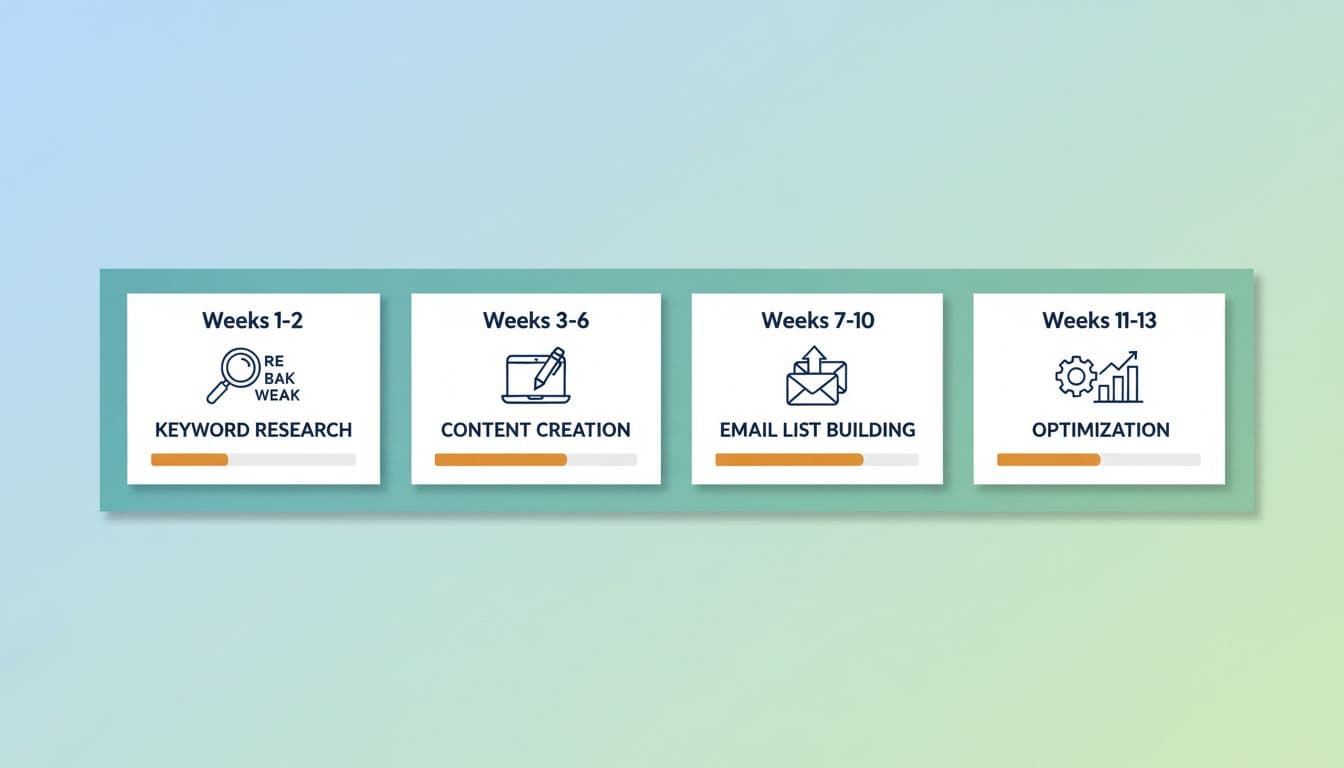
This plan prioritizes “money pages” early, then updates and internal improvements later (because in 2026, helpful pages that stay accurate tend to outlast hype posts).
| Week | Main work (weekly tasks) | Posts published | Sessions | Clicks | Sales | Revenue |
|---|---|---|---|---|---|---|
| 1 | Pick niche angle, pick 2 offers, add disclosure, set tracking | 0 | 200 | 4 | 0 | $0 |
| 2 | Keyword list (intent first), build 3 content briefs, add EEAT pages | 1 | 250 | 6 | 0 | $0 |
| 3 | Publish 1 review, add comparison table, add “who it’s for” sections | 2 | 320 | 10 | 0 | $0 |
| 4 | Publish 1 comparison, add FAQ, add screenshots, improve titles/meta | 2 | 450 | 18 | 0 | $0 |
| 5 | Publish 1 “best for” list, add email opt-in, write welcome email | 2 | 600 | 28 | 0 | $0 |
| 6 | Update older posts to match niche, add internal links, prune fluff | 1 | 750 | 36 | 1 | $85 |
| 7 | Publish 2 supporting posts, add “alternatives” section to money pages | 2 | 950 | 50 | 1 | $85 |
| 8 | Improve conversion: buttons, table above fold, clearer pros/cons | 1 | 1,150 | 62 | 2 | $170 |
| 9 | Add “use-case” post, refresh pricing, add trust proof and author notes | 1 | 1,350 | 78 | 2 | $170 |
| 10 | Publish 1 new money page, test CTAs, tighten intros for intent | 1 | 1,650 | 95 | 2 | $160 |
| 11 | Update top pages, add comparison video or images, expand FAQs | 0 | 1,850 | 112 | 3 | $240 |
| 12 | Publish 1 “best for beginners,” add lead magnet, improve email follow-up | 1 | 2,050 | 125 | 4 | $320 |
| 13 | Refresh winners, cut losers, build 30-day update cadence | 0 | 2,200 | 132 | 4 | $320 |
Weeks 10 to 13 total: $1,040, which clears the $1,000/month mark for the final 30 days in this scenario.
For context on how other site owners report growth (and the ups and downs), see this example: affiliate marketing income report.
Three example content briefs (written for intent, not word count)
Content brief 1: Product review (high intent)
Working title: “[Product] Review: What I’d Use It For (and What I Wouldn’t)”
Intent: “Should I buy this?”
Must include: Real pros/cons, setup steps, who it’s best for, pricing notes, alternatives, FAQ, disclosure near first link
Affiliate placement: Top summary box plus 2 contextual links in-body
Content brief 2: Comparison post (buyer choice)
Working title: “[Product A] vs [Product B]: Which Fits a Beginner Budget?”
Intent: “Help me choose”
Must include: Comparison table above the fold, “if you care about X, pick Y,” refund notes, cookie window mention if relevant
Affiliate placement: One link per product in the table, plus a “best pick” section
Content brief 3: “Best for” list (category intent)
Working title: “Best [Category] for [Specific Use Case] (2026 Picks)”
Intent: “Show me the best option for my situation”
Must include: Shortlist (3 to 5 items), clear selection criteria, who each is for, update date
Affiliate placement: Buttons under each item, plus an email opt-in for a “starter checklist”
Tracking stack (so you can fix what’s broken)
Track like an adult, even if you still eat cereal for dinner.
Simple stack:
- GA4 + Search Console for traffic and queries
- UTMs on outbound links (source, medium, campaign, content)
- Affiliate dashboard for clicks, EPC, refunds
- A basic Looker Studio or spreadsheet dashboard
- Link cloaking is optional, use it only if it won’t confuse readers
Good KPI examples to watch: affiliate marketing KPIs.
Affiliate disclosure language and compliance reminders
Put a clear disclosure near the first affiliate link and on pages with affiliate content.
Disclosure: This post contains affiliate links. If you buy through my link, I may earn a commission at no extra cost to you. I only recommend tools I’d use myself and think are a good fit for beginners.
Compliance basics:
- Don’t hide disclosures in the footer
- Don’t claim income results you can’t prove
- Keep pricing and features updated
- Add an author bio, contact page, and “how we test” notes to support trust
What we learned (and what to repeat)
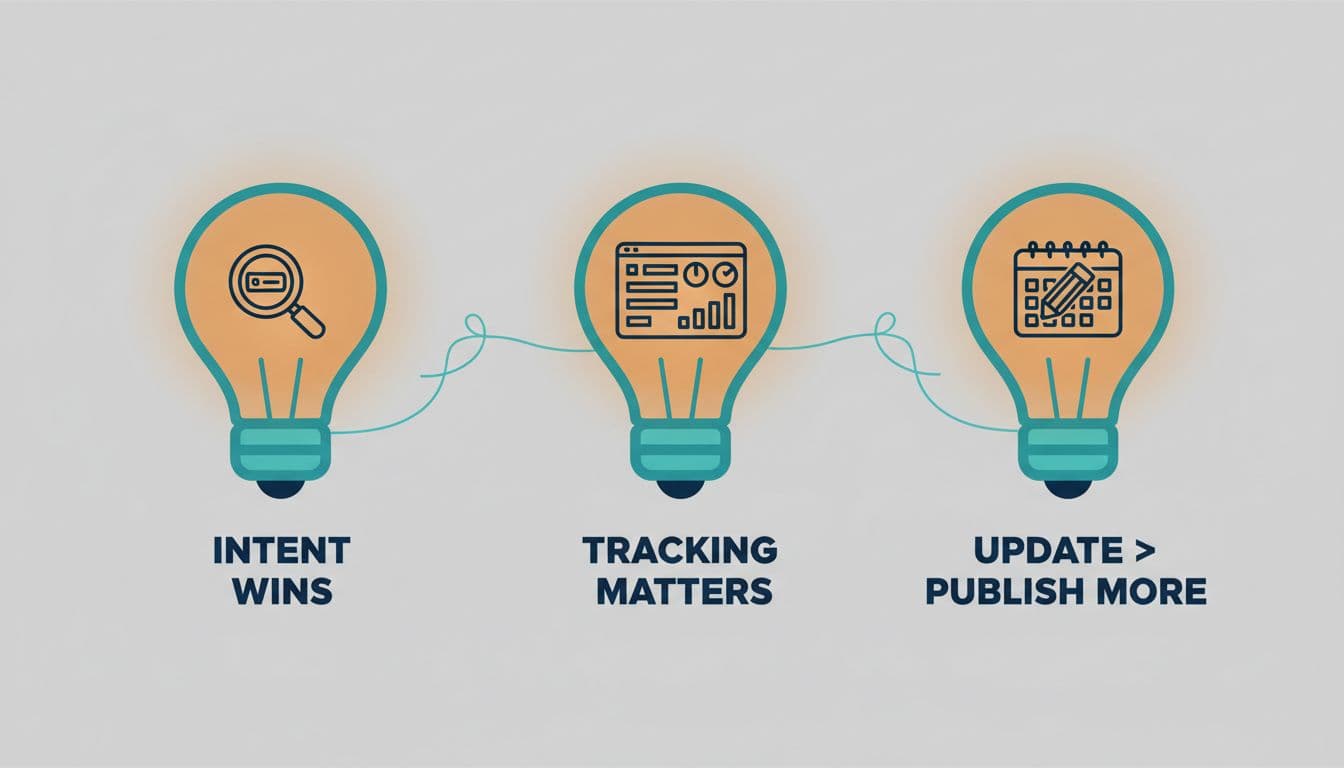
- Intent wins: “Best” and “vs” pages carried revenue, not random tutorials.
- Tracking matters: Small changes (table placement, CTA text) showed up in clicks.
- Update beats panic-posting: Refreshing winners often outperformed new posts.
Conclusion: $1,000/month in 90 days is possible for a small blog, but it’s not automatic. Pick offers with care, publish a tight set of intent-led pages, track the numbers weekly, and keep updating what starts to rank. If you want this to replace a 9 to 5, treat it like a 9 to 5 for 90 days, with fewer meetings and better snacks.

My Name Is Rafael Ferreras. I share practical tips, tools, and resources to help make building income online simpler and more approachable. I am a professional digital marketer with over 14 years of experience in the industry. My expertise is in email marketing and boosting conversions with bridge pages. I write about affiliate marketing and traffic generation.





Pingback: Pinterest Group Boards For Affiliate Marketing