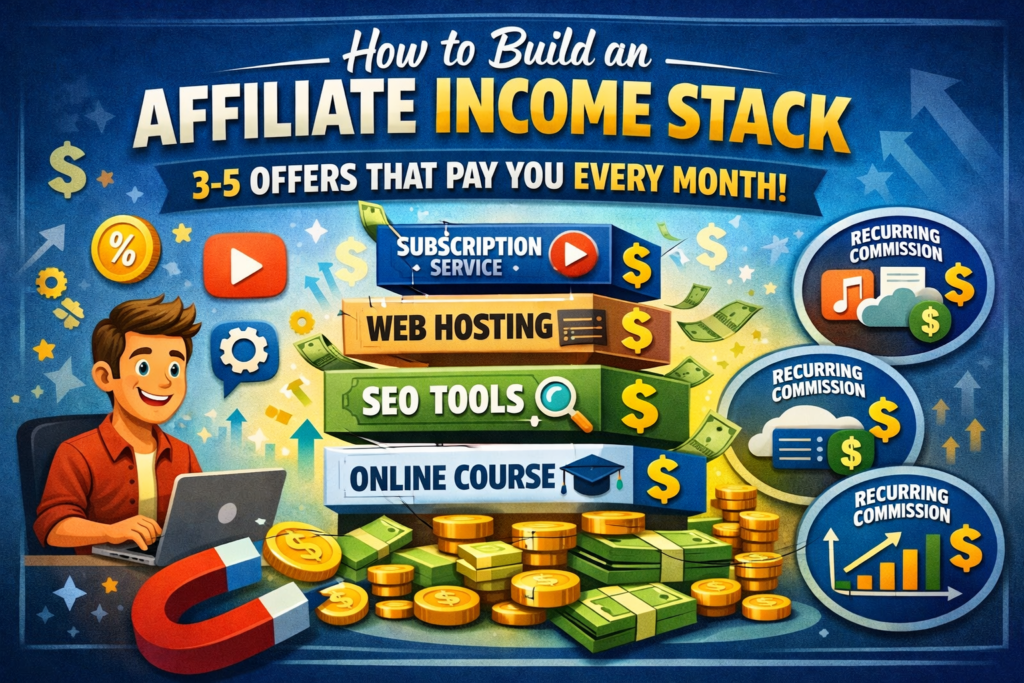
Most affiliate advice sounds like a slot machine: publish a link, pull the handle, hope for a payout. That works sometimes, but it’s stressful, and your budget can’t run on “sometimes.”
An affiliate income stack is the opposite. It’s a small set of recurring offers (usually subscriptions) that fit together like a basic toolset. Each new customer can pay you again next month, and the month after that, as long as they stick around.
Recurring doesn’t mean instant. It means you’re building something that can compound, one helpful recommendation at a time, without waking up every morning feeling like your income reset to zero.
What “recurring” really buys you (and what it doesn’t)
Recurring affiliate commissions are simpler than they sound: you refer a subscriber, you get paid while they stay subscribed. In practice, you’re trading one big pop for many smaller, steadier payments.
That steadiness matters when you’re trying to leave a 9-to-5. Random commissions feel exciting, until rent is due.
Recurring also has a catch: churn. Customers cancel tools they don’t use. So your job is not just “get the click.” Your job is “help the right person pick the right tool, then succeed with it.”
The offer filter: pick stack offers that won’t fall apart
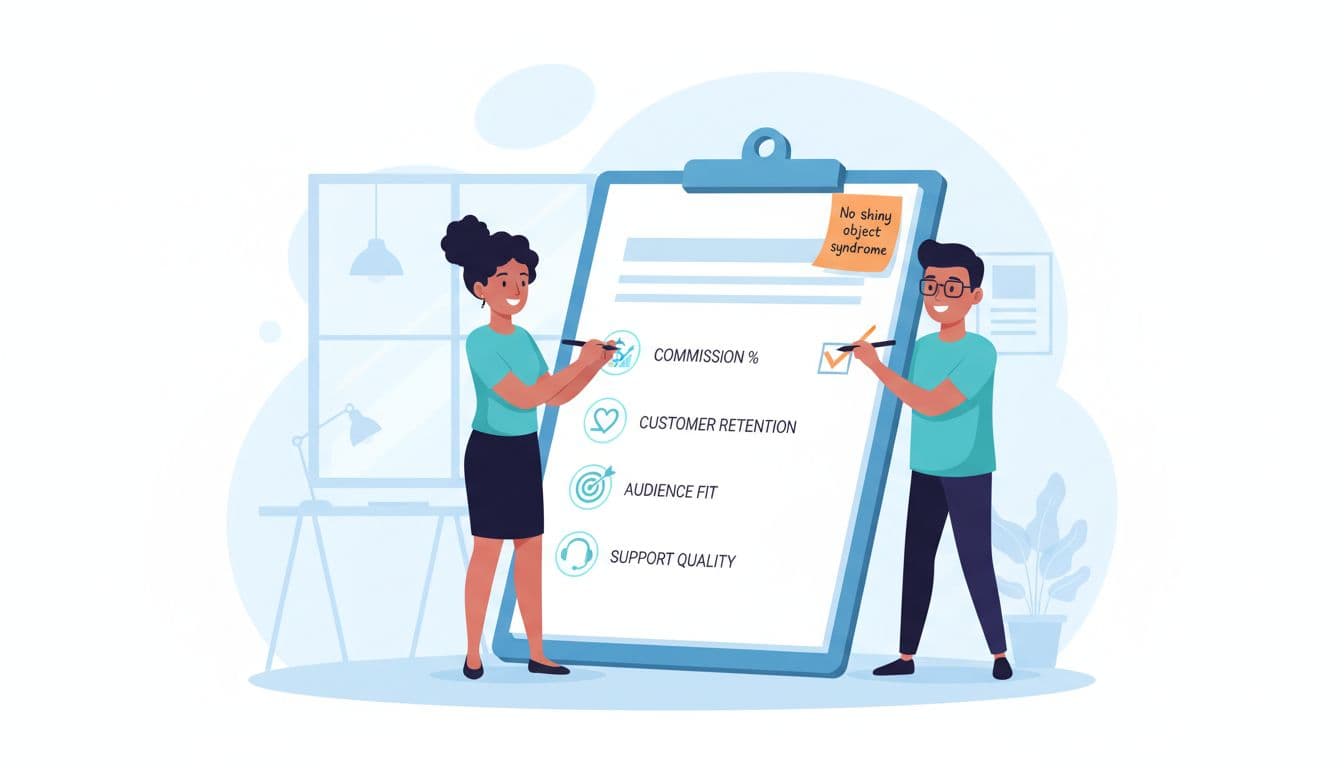
You only need 3 to 5 offers, but they must be the right 3 to 5. Use this quick filter before you apply to anything.
The “4-Fit” offer checklist
1) Audience fit If your audience is new to online business, don’t start with advanced tools that need a setup team and three Zoom calls. Match the tool to their skill level and patience.
2) Problem urgency Recurring offers sell best when they solve a repeating need: email list growth, hosting, scheduling, lead capture, customer support, reporting, billing.
3) Retention likelihood Ask: will people use this every week? Tools tied to daily work tend to stick longer than “nice-to-have” extras.
4) Program reliability Look for clean tracking, clear terms, and a real support team. Also, verify whether commissions are recurring, and for how long. Terms change.
If you want a simple next step, download a one-page checklist and score each offer from 1 to 5. Your goal is boring consistency, not a trophy case of affiliate dashboards.
For ideas, scan curated lists like recurring affiliate program examples and then narrow down to what your audience truly needs.
A beginner-friendly 3-offer affiliate income stack (simple, sellable, useful)
Three offers is enough to start, especially if you’re still building traffic and trust. Think “core business basics,” not shiny add-ons.
Here’s a clean 3-offer stack that works for many beginner audiences (bloggers, freelancers, side hustlers):
| Offer type (recurring) | Why it belongs in the stack | Best content angle |
|---|---|---|
| Website hosting or site platform | Most online income plans need a home base | “How to start a site the simple way” |
| Email marketing service | Email follows up when you’re not online | “My welcome sequence template” |
| Funnel builder or lead capture tool | Turns visitors into leads consistently | “Free checklist + tutorial setup” |
Why this stack converts: it supports one clear outcome, building an audience you can reach again. It also avoids the “random tools” trap where nothing fits and everything cancels by month two.
Call to action to implement it: build your first comparison page. Keep it honest, include who each tool is for, who should skip it, and what it costs monthly.
A more stable 5-offer stack (two niche examples)
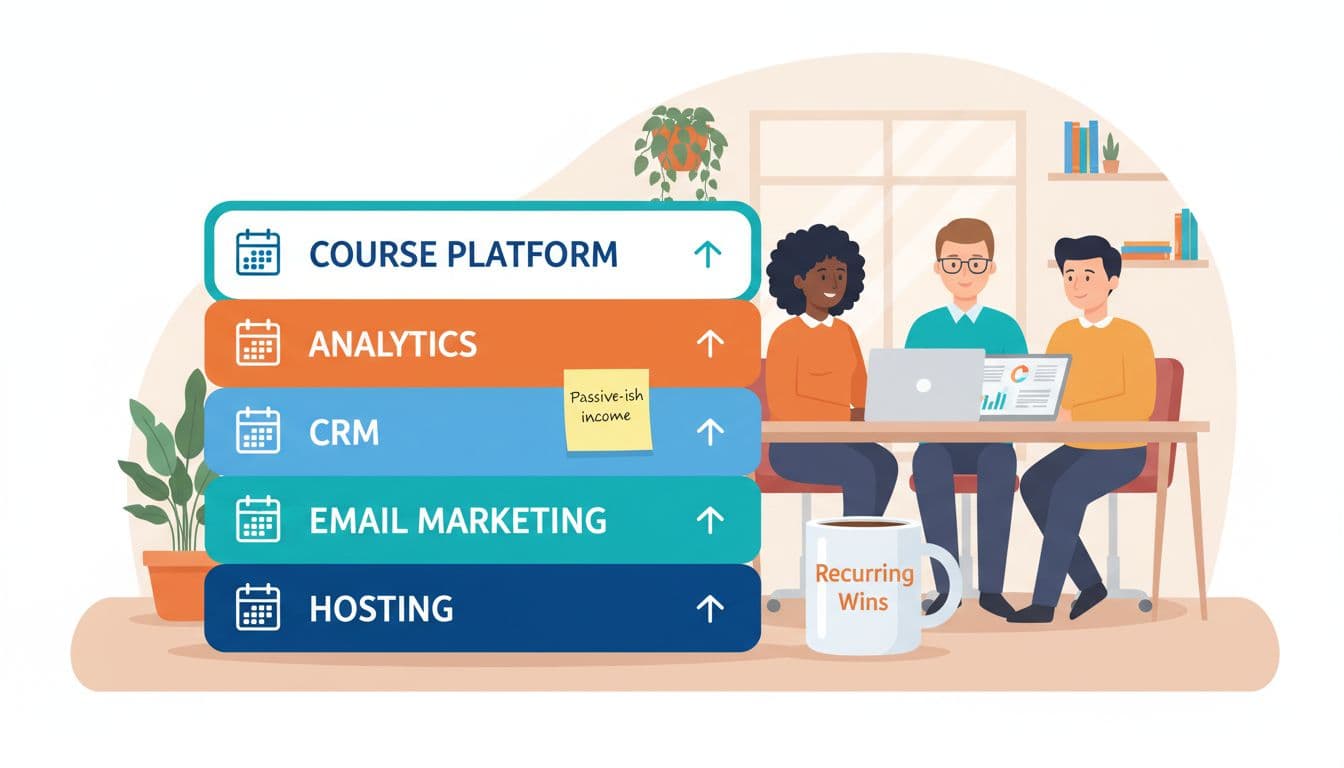
A 5-offer stack adds “supporting tools” that increase value without confusing the reader. The rule: every extra offer should make the previous offers work better.
Niche example: course creators and coaches
- Hosting or site platform (where the brand lives)
- Email marketing (lead nurturing and launches)
- Course or membership platform (delivery and retention)
- Scheduling tool (book calls, reduce back-and-forth)
- Analytics or reporting tool (know what’s working)
Content that sells it without hype: “My basic course tech setup” and “Tools I’d choose if I restarted.”
Niche example: local service business marketing (roofers, dentists, salons)
- Lead capture tool (forms, popups, quote requests)
- CRM or pipeline tracker (follow-up and appointments)
- Email or SMS follow-up tool (reduce missed leads)
- Call tracking or chat tool (prove lead sources, convert more)
- Reputation or review management tool (social proof on autopilot)
If you need more recurring categories (and want to sanity-check what “recurring” looks like in the wild), skim recurring revenue affiliate programs in 2026 and cross-reference with broader lists like Shopify’s affiliate program roundup. Don’t copy someone else’s list, use it to spot patterns.
Build the funnel that makes monthly offers feel natural
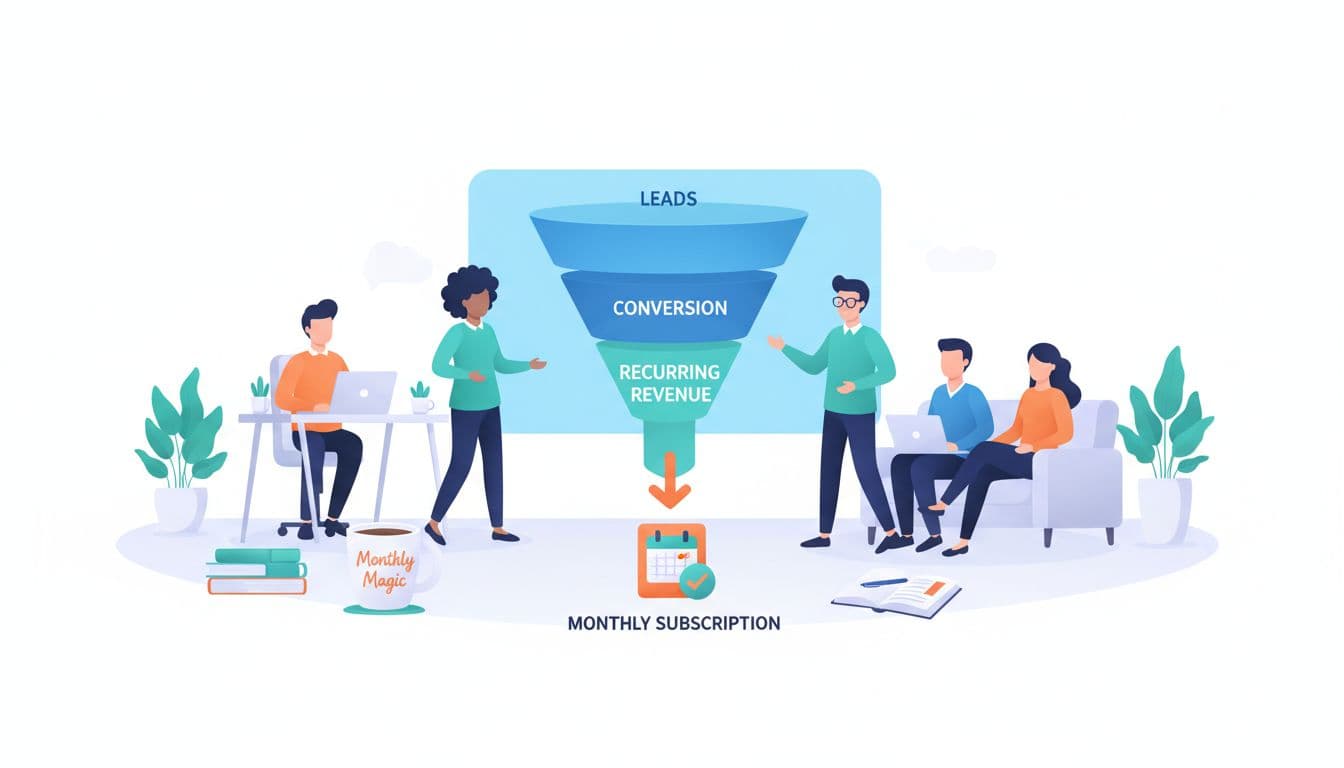
You don’t need a complicated funnel. You need a clear path that matches how people actually decide.
A practical “stack funnel” looks like this:
1) One problem-focused article
Example: “How to start an email list for a new blog.”
2) A simple lead magnet
Checklist, template, or short tutorial. Nothing that takes you a weekend to finish.
3) A short email sequence
Teach the basics, share a setup guide, and recommend the tool as the next step.
4) One comparison page
This is where recurring offers shine. Compare 2 to 3 options, add a plain recommendation, and include pros and cons.
Internal-style action step: write one “Tool A vs Tool B” page this week. Make it readable, not “salesy.” Your future self will thank you.
Protect the stack: retention is part of the job

Recurring commissions grow when customers stick. Help them stick.
A few retention-friendly habits:
Teach quick wins: publish “first 30 minutes” setup steps so beginners don’t stall.
Add a troubleshooting page: cancellations often happen after a small tech snag.
Recommend fewer tools: tool overload is the fastest path to refunds and cancellations (and stress headaches).
Dry truth with a smile: passive income is real, it’s just not always passive for the first 90 days.
FTC affiliate disclosure: be clear, not sneaky
If you use affiliate links, disclose it in plain language near the link, not buried on a separate page nobody reads.
A simple line works: “If you buy through my link, I may earn a commission at no extra cost to you.” Also mention if you received any free access or perks.
Transparency is not a legal box to check. It’s part of why people trust your recommendations and keep coming back.
Conclusion: start small, stack smart, stay honest
An affiliate income stack works best when it’s simple: 3 to 5 monthly offers that solve real problems and fit together. Pick tools people will keep, publish content that matches buyer intent, and support customers so they succeed (and stay subscribed). Build one comparison page, publish one setup tutorial, and keep improving from there. Consistency is the boring superpower that gets you out of the 9-to-5.

My Name Is Rafael Ferreras. I share practical tips, tools, and resources to help make building income online simpler and more approachable. I am a professional digital marketer with over 14 years of experience in the industry. My expertise is in email marketing and boosting conversions with bridge pages. I write about affiliate marketing and traffic generation.