Some affiliate posts attract curious readers who are months away from buying. Others attract people with a credit card in hand and a deadline in their calendar.
The sweet spot is the search that sounds oddly specific, like: “[tool] for editing podcast audio” or “[tool] for tracking freelance invoices.” That’s not window-shopping. That’s problem-solving.
This post breaks down a use case affiliate template you can repeat for those “ready buyer” searches, so your content helps, ranks, and earns without acting like a late-night infomercial.
Disclosure: This post contains affiliate links, which means I may earn a commission if you buy through my links (at no extra cost to you). I only recommend tools I believe are a good fit for the job.
Why “[tool] for [specific task]” searches convert so well
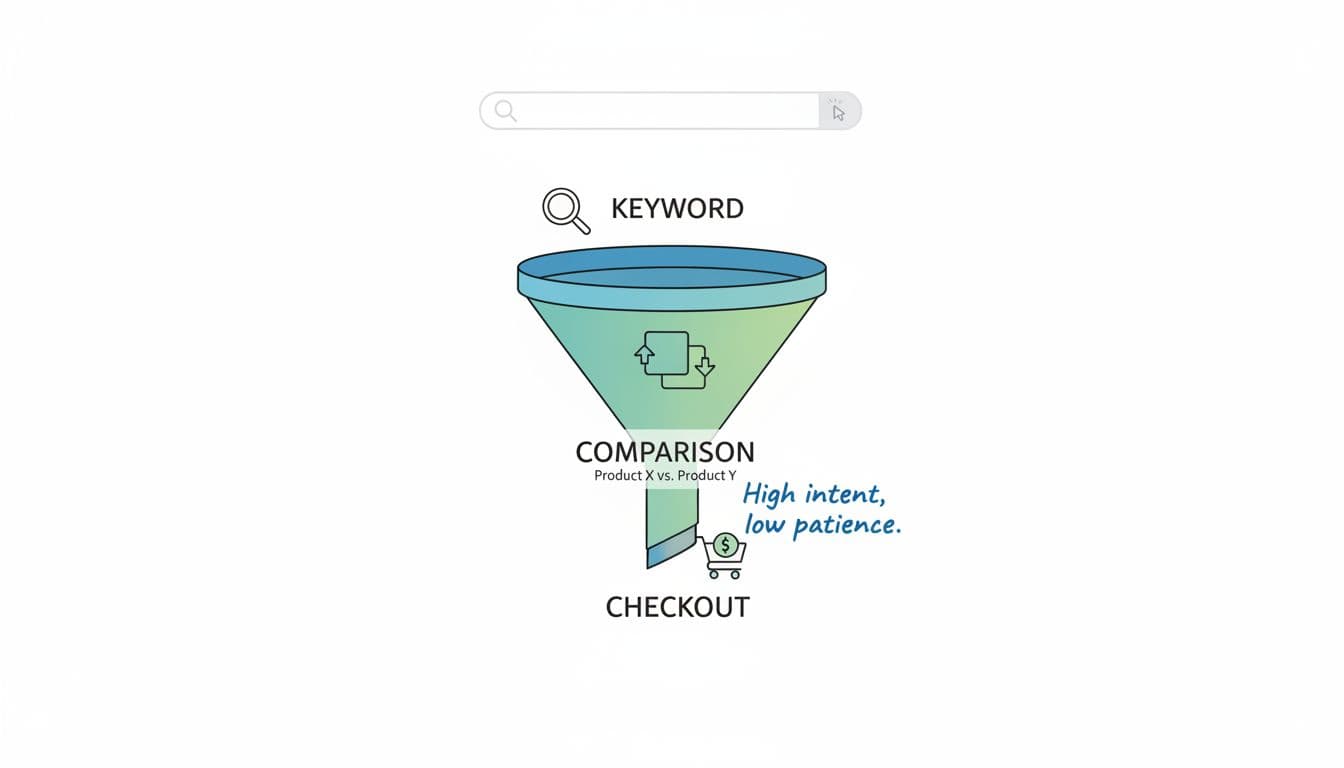
A “[tool] for [task]” query is usually a buyer who already picked the “what,” and now needs the “which.” They’re not asking what email marketing is. They’re asking which tool will stop their Monday from catching fire.
This matters because search intent has gotten less forgiving in 2026. If your page doesn’t immediately match the job-to-be-done, the reader bounces, and Google learns your page didn’t satisfy them.
In plain terms, these searches convert because they include:
- A named solution category (a tool, app, software)
- A real task (a job they need done)
- A time-pressure vibe (often implied, sometimes obvious)
If you want a crisp definition of buyer intent (and why it tends to produce better leads), see this breakdown of buyer intent keywords.
The goal of your post is not to “review the tool.” It’s to help the reader finish the task. The tool is just the means to an end, like a wrench. A shiny wrench is cute, but the sink is still leaking.
A practical filter before you write: if the reader bought today, would they get a win this week? If yes, you’re in the right territory.
The “Use-Case” affiliate post template (copy it, don’t overthink it)
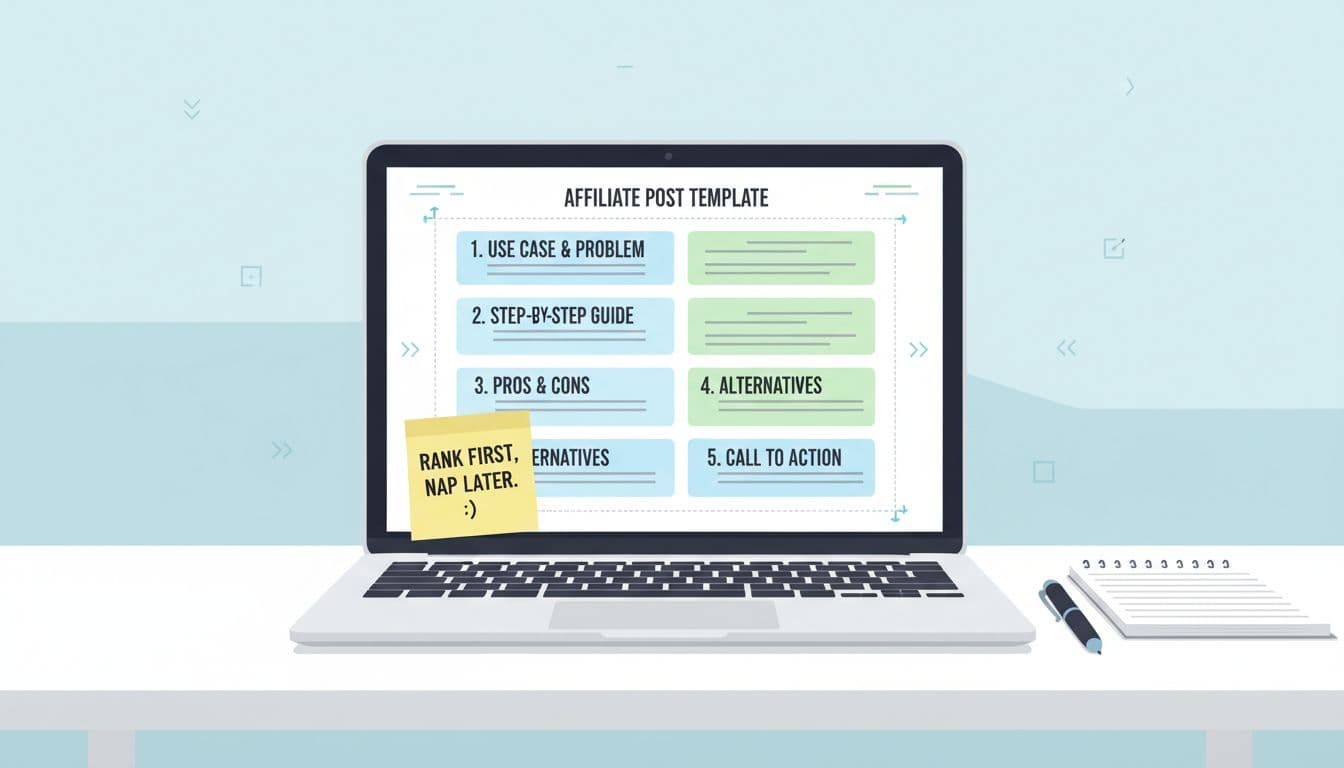
This use case affiliate template works because it reads like a helpful walkthrough, not a sales pitch. You’re showing the reader how to get a result, then recommending the best tool to do it.
Here’s the core structure, with each section doing one job:
| Section | What it accomplishes |
|---|---|
| Quick answer (top) | Confirms they’re in the right place |
| Use-case story | Builds trust and context fast |
| Step-by-step workflow | Proves the tool fits the task |
| Pros/cons (task-based) | Helps the decision feel “safe” |
| Alternatives | Keeps you honest, improves fit |
| Pricing and “gotchas” | Reduces refunds and regret |
| CTA | Gives a clear next step |
Example headlines you can reuse
- Best [Tool Type] for [Specific Task] (2026)
- [Tool] for [Specific Task]: Setup, Workflow, and Results
- How I Use [Tool] to [Specific Task] (Step-by-Step)
Reusable copy blocks (edit the brackets)
Top of post “quick answer”:
If you need [tool] for [specific task], start with [recommended tool]. It’s best for [who it’s for] because [reason tied to the task]. If you need [edge case], I’d pick [alternative] instead.
Use-case story opener:
I ran into [problem] when I tried to [task]. I tested [2 to 3 approaches], and the fastest fix was [tool] using [feature/workflow]. Here’s the exact setup and the steps.
Mini fill-in-the-blank template (your writing “skeleton”):
- Who this is for: If you’re [role] trying to [task] without [pain]
- The task: What “done” looks like in one sentence
- The tool: What it does (no hype), why it fits this task
- The workflow: Step 1 to Step 5, each with a “why”
- The limits: When it’s a bad fit, and what to use instead
- The next step: Try it, start a trial, or see pricing
If you want your site structure to support these posts (so they don’t feel orphaned), build the basics from this 3-page affiliate site blueprint. It makes your “money pages” feel like part of a real business.
Optional illustration suggestion for this section: add a simple “before/after workflow” graphic (messy tabs vs one clean tool) right after the workflow steps, to reinforce the transformation.
How to rank the page and earn commissions (without being weird about it)
Ranking for “[tool] for [task]” is less about clever tricks and more about being the clearest match for the task. Make your page the best “problem solver” on the topic.
On-page basics that still move the needle:
- Put the full phrase in the title and early in the post, then write naturally.
- Use task-based headings (Setup, Workflow, Common Mistakes, Alternatives).
- Add a small comparison table if buyers need to choose between plans or options.
- Include 5 to 7 short FAQs that answer real objections (time, cost, learning curve).
For a solid, practical list of modern on-page tactics, this affiliate marketing SEO guide is a useful reference.
Conversion is where most affiliate posts quietly fail. They rank, they get traffic, and then they whisper the recommendation like it’s a secret. Your CTA should be calm, direct, and placed where the reader is ready.
A simple CTA pattern that works:
- After the quick answer
- After the step-by-step workflow (they’ve “seen it work”)
- In the conclusion (final nudge)
Keep disclosures clear and near your first affiliate link. Not hidden in the footer like it owes you money.
Finally, publish enough of these posts to build topical depth. One great use-case post is nice. Ten is a system. If you want a realistic publishing pace, follow a plan like the Affiliate Content Sprint so you’re not guessing what to write next.
Picking offers matters too. High-ticket can hit your income goal with fewer sales, low-ticket can bring faster early wins. This guide on high-ticket vs low-ticket affiliate marketing helps you choose based on math, not vibes.
If you’re struggling to find these ready-to-buy phrases, this post on buyer intent keyword research shows practical angles people miss.
Conclusion
A “[tool] for [specific task]” post works because it meets the reader right at the decision point, when they want a result, not a lecture. Use the use case affiliate template to show the workflow, name the trade-offs, and offer a clear next step with a clean disclosure.
Pick one task your audience already struggles with, write the use-case post this week, then repeat it for nine more tasks. Your future self can keep the 9-to-5 for now, but it won’t feel permanent anymore.

My Name Is Rafael Ferreras. I share practical tips, tools, and resources to help make building income online simpler and more approachable. I am a professional digital marketer with over 14 years of experience in the industry. My expertise is in email marketing and boosting conversions with bridge pages. I write about affiliate marketing and traffic generation.