Most beginner affiliate sites don’t fail because the owner picked the “wrong niche.” They fail because the site looks unfinished, feels untrustworthy, and has no clear path for a visitor to follow.
This affiliate site blueprint fixes that with only three pages, built in the right order, with the right words on each page. Think of it like opening a small shop: you need a shelf with the products (money page), a front desk with directions (start here), and a way to prove you’re a real human (about/trust). Everything else can come later.
If you’re trying to replace a 9 to 5 income, you need fewer distractions and more pages that do a job.
What this 3-page structure actually does (and why it converts)
This blueprint matches how people search and buy:
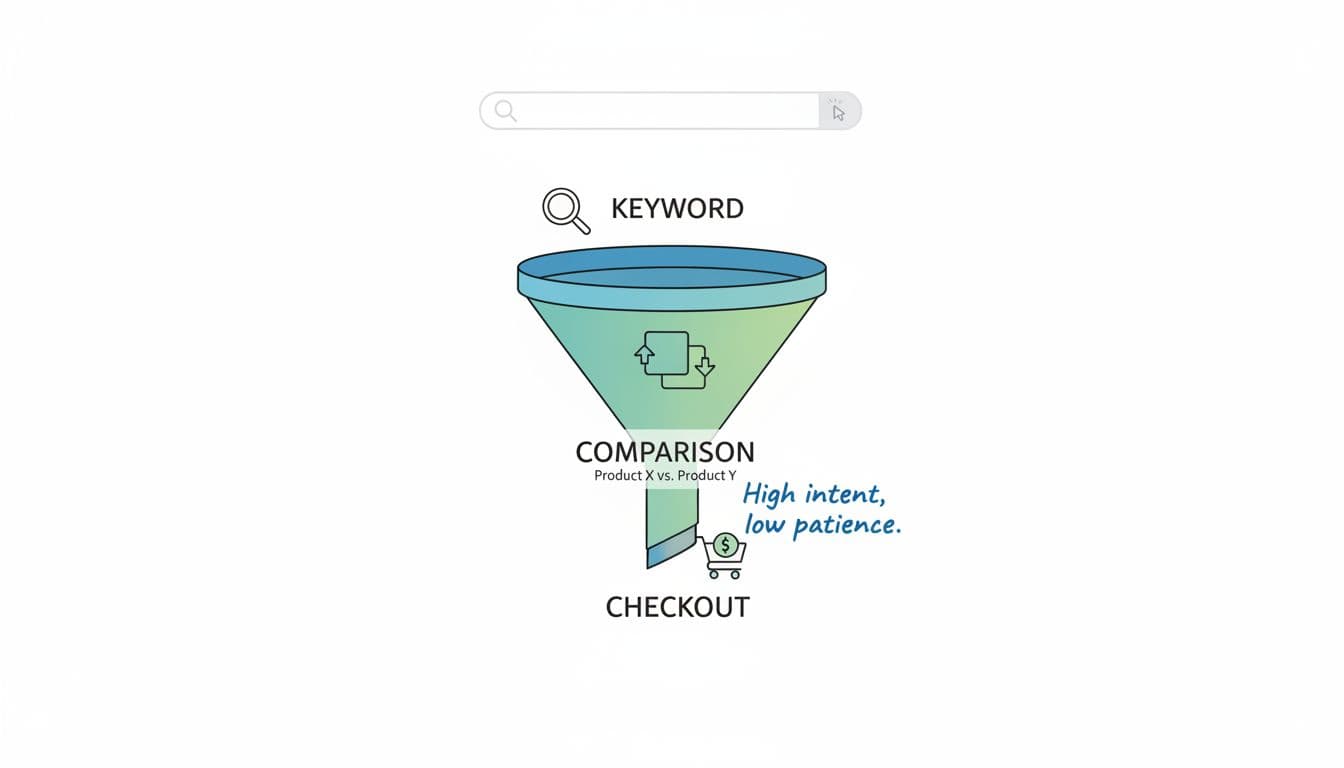
Search intent: Most affiliate clicks come from “best,” “review,” and “compare” searches. Your money page is built to satisfy that intent fast.
Trust needs: New visitors are quietly asking, “Who are you, and why should I listen?” That’s the job of the about/trust page.
Direction: Beginners get overwhelmed. A “Start Here” page gives them a clear next step and keeps them on your site longer.
If you want a broader look at how affiliate sites are typically structured, Ahrefs’ beginner lessons are a solid reference point (even if you don’t use their tools): Ahrefs affiliate marketing course lesson on building a site.
Page 1 (Build first): The Money Page (Best/Reviews)
This is the page that earns. It targets a buyer-focused keyword like “Best X for Y” or “X vs Y,” then makes the decision easy.
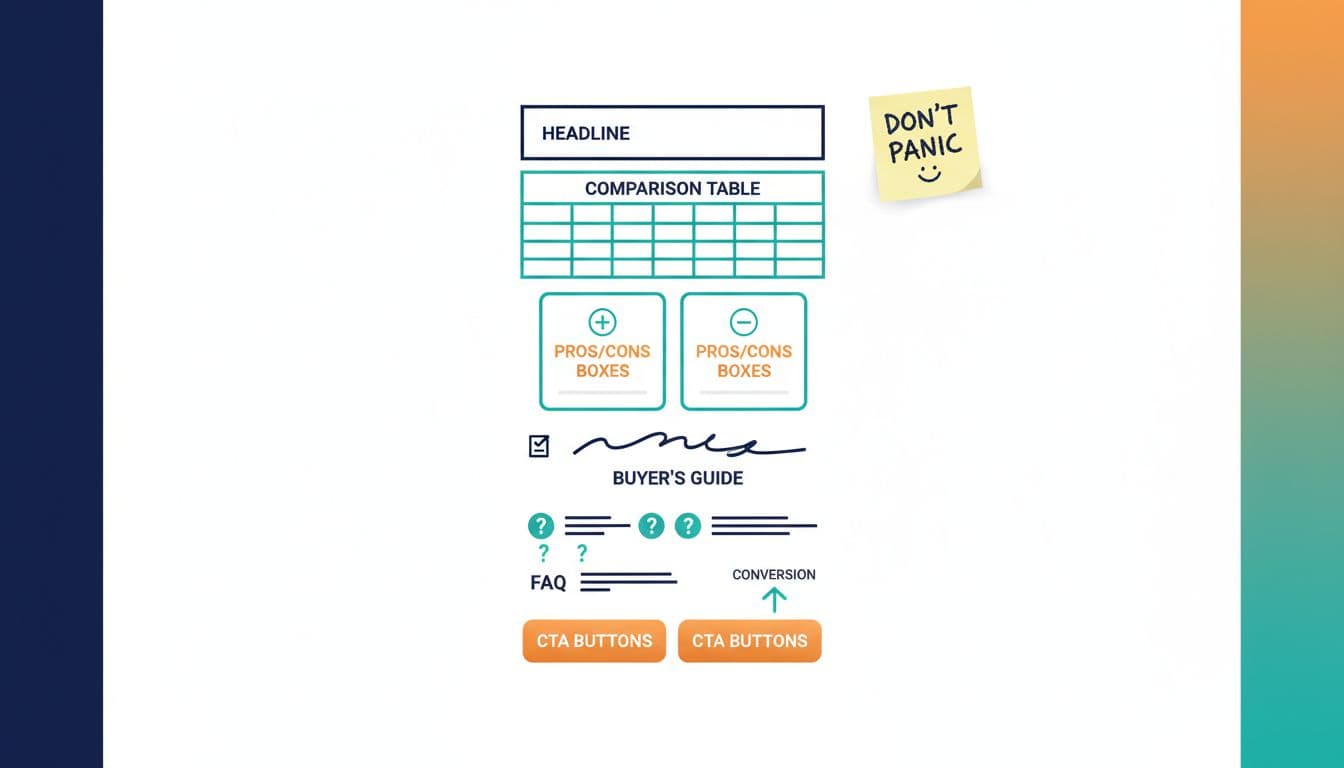
What your money page should say (in this order)
1) A clear promise (no poetry)
Say who it’s for, what you’re comparing, and what “best” means (price, ease, support, results, or all four).
Copy/paste hero intro template (edit the brackets):
Headline: Best [Product Type] for [Audience] (2026 Shortlist)
Subhead: If you want [desired outcome] without [common pain], this page ranks the top [number] options and shows which one fits your budget and goals.
Quick credibility line: I’ve tested, tracked, or researched these options using [criteria], and I update this list when offers change.
2) FTC disclosure near the top (before links)
Place it above your first affiliate link, and also in the footer if you want redundancy.
Copy/paste disclosure snippet:
Disclosure: Some links on this page are affiliate links. If you buy through them, I may earn a commission at no extra cost to you. I only recommend tools I believe are a good fit for beginners.
For additional context on training and ethics, it can help readers to browse third-party perspectives on learning paths, like this overview: Dreamgrow’s roundup of affiliate marketing courses.
3) A comparison table (fast decision-making)
Keep it simple. You’re not filing taxes.
| Option | Best for | Main downside | Why it made the list |
|---|---|---|---|
| Option A | Total beginners | Fewer advanced features | Easiest to set up |
| Option B | Budget-focused | Less support | Lowest monthly cost |
| Option C | Growth-minded | Learning curve | Strong tools long-term |
4) Mini reviews with proof and limits
For each pick: who it’s for, what you like, what you don’t, and a “buy if” line. Add trust signals when honest and available (refund terms, support hours, public pricing pages). Don’t invent anything.
5) Buyer’s guide (answers objections)
Write 5 to 8 short sections: pricing, difficulty, time required, who it’s not for, and what results depend on (traffic, consistency, offer quality). This keeps it ethical and reduces refund headaches.
6) FAQs (for snippets and skimmers)
Include 5 to 7 questions you can answer in 2 to 3 sentences each.
7) A strong, calm CTA
Don’t shout. Just point.
Copy/paste review conclusion CTA:
If you want the simplest path to [outcome], I’d start with [Top Pick]. It’s the best fit for [audience], and it doesn’t require [pain point]. Check current pricing and details here: [Affiliate link].
Dry humor is allowed in small doses: “No, it won’t do push-ups for you, but it will save you time.”
Page 2: The Start Here / Resources Page (your on-site tour guide)
This page is for new visitors who aren’t ready to buy yet, or who landed on your about page and need direction.
What it should say
A friendly “you’re in the right place” opener
One paragraph that names the problem and the path: “Pick a product, get a basic site live, publish one money page, then grow content.”
A simple 3-step path (keep it short)
Step 1: Read the money page (link it).
Step 2: Join your email list for a beginner guide (optional but smart).
Step 3: Read your about page (link it) to understand how you recommend tools.
A small lead magnet pitch (optional, not pushy)
Offer something real: a checklist, a beginner roadmap, or a “tool stack” PDF.
Resource buckets (not a giant list)
Use 3 to 5 categories max, like: Getting started, Traffic basics, Email basics, Tool reviews.
Quick title tag idea
“Start Here: [Niche] Tools and Beginner Steps (2026)”
Page 3: The About/Trust Page (where clicks get permission)
If your money page is the cashier, this page is the handshake. People often check it right before buying.
What it should say
Your “why” in plain language
Two short paragraphs. Who you help, what you believe, and what you don’t do (no hype, no fake screenshots, no overnight claims).
Your review process
Explain how you pick products. Example: beginner friendliness, support quality, total cost, and refund clarity.
Trust signals (only true ones)
Add details that reduce fear: how you make recommendations, how often you update pages, and how readers can reach you.
Copy/paste credibility bullets (edit to match reality):
- I focus on tools that are beginner-friendly and clearly priced.
- I update “best” lists when features or pricing changes.
- I point out downsides, even when I might earn a commission.
- I recommend only products I’d suggest to a friend who’s starting from zero.
Compliance essentials (don’t skip these)
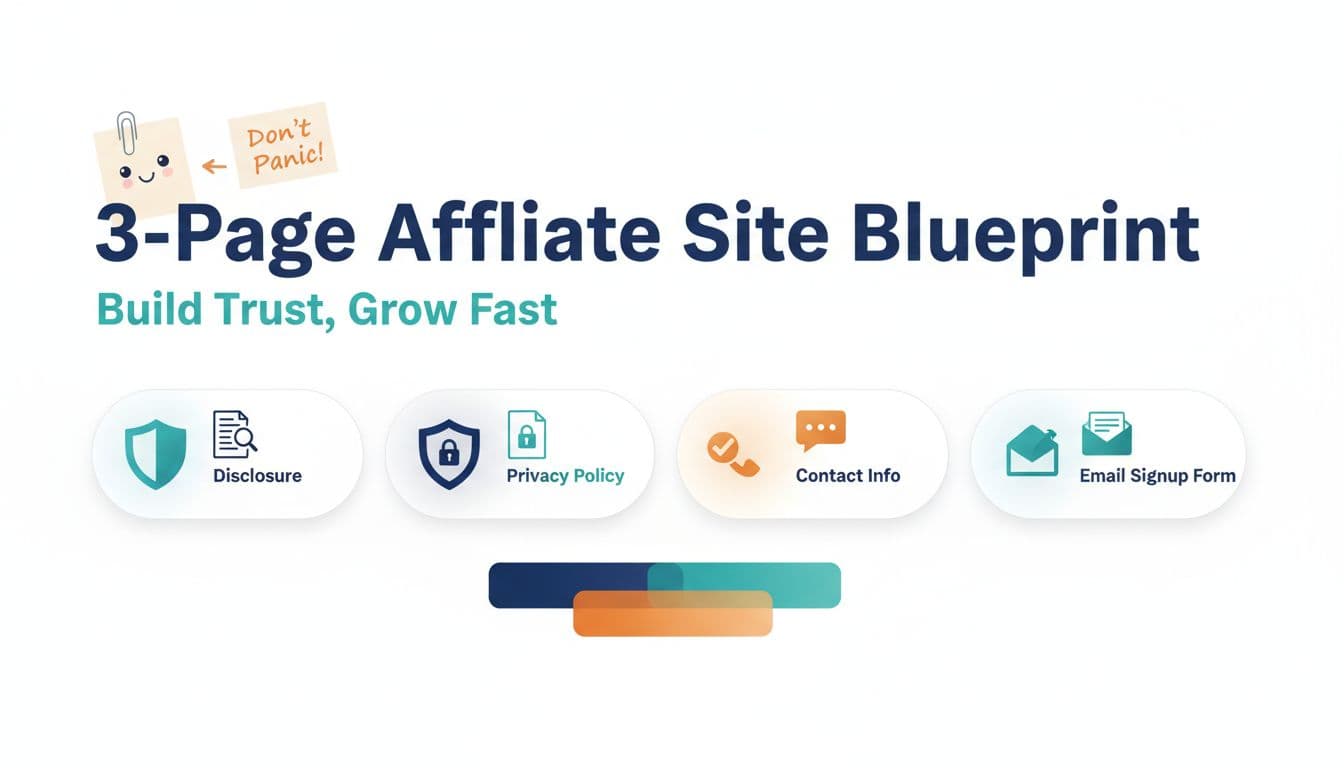
Include a short disclosure section here too, plus a basic privacy note and a contact method. If you can’t add separate pages yet, include these sections now and split them into dedicated pages later.
If you want a contrast point, some marketers argue you can do this with one page. It can work in certain cases, but it’s riskier for trust. See an example of that argument here: one-page website blueprint.
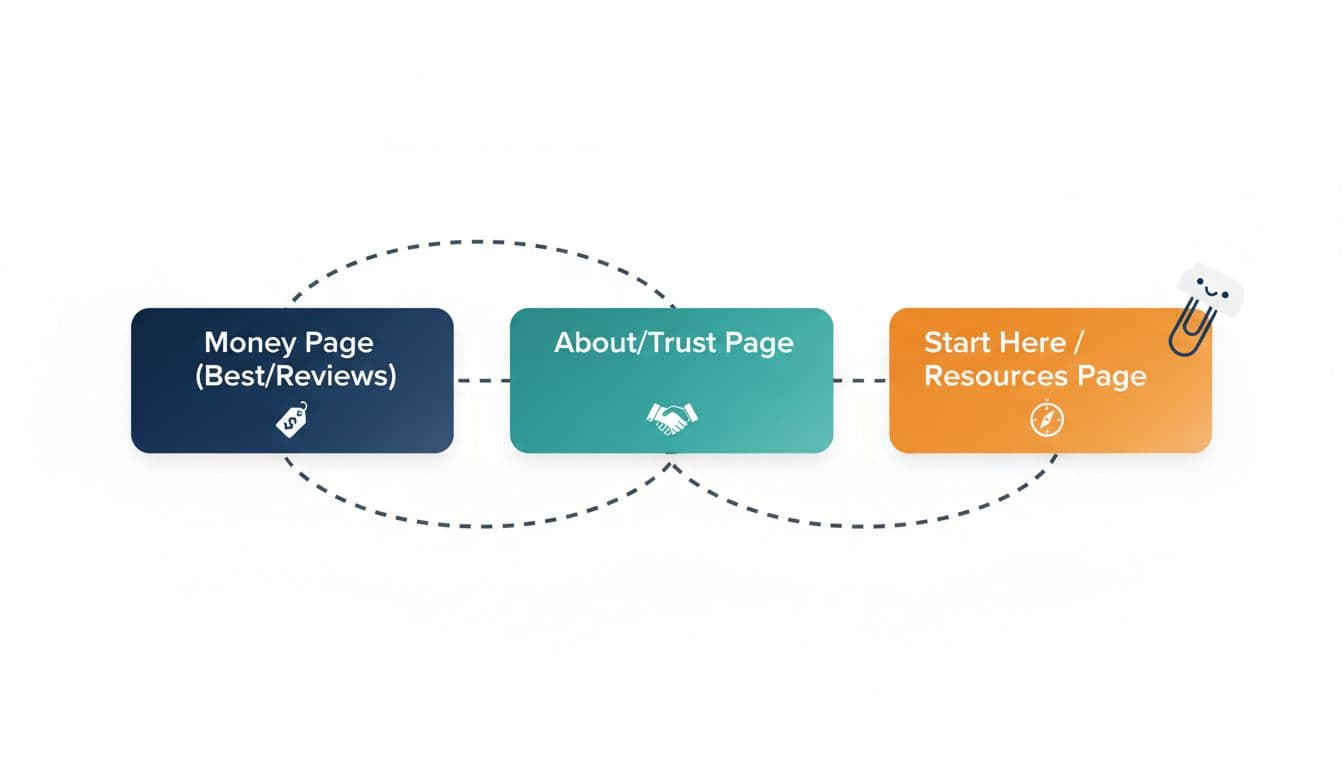
How the three pages should link to each other (simple and intentional)
Money Page links to: About/Trust (near the top), Start Here (in the footer or sidebar).
Start Here links to: Money Page (primary), About/Trust (secondary).
About/Trust links to: Start Here (primary), Money Page (secondary, like “My recommended starting point”).
This keeps readers moving, and it spreads authority across the site without needing 50 posts.
A simple first-week publishing timeline (so you don’t stall out)
Day 1: Pick one buyer keyword, define your audience, outline the money page.
Day 2: Write the money page hero, table, and top pick review.
Day 3: Finish the money page (buyer’s guide, FAQs, CTAs, disclosure).
Day 4: Publish Start Here, add email signup (optional), link to money page.
Day 5: Publish About/Trust, add contact and privacy notes.
Day 6: Read all three pages out loud, tighten weak spots, fix unclear claims.
Day 7: Add one supporting mini-post later if you want, but only after the three pages are solid.
Conclusion
A three-page site sounds almost too small, but that’s the point. This affiliate site blueprint gets you to “useful” and “trustworthy” fast, without building a 40-page maze no one asked for. Start with the money page, then add direction, then add trust. After that, every new post has a clear place to link back to, and your site starts acting like a business instead of a draft.

My Name Is Rafael Ferreras. I share practical tips, tools, and resources to help make building income online simpler and more approachable. I am a professional digital marketer with over 14 years of experience in the industry. My expertise is in email marketing and boosting conversions with bridge pages. I write about affiliate marketing and traffic generation.