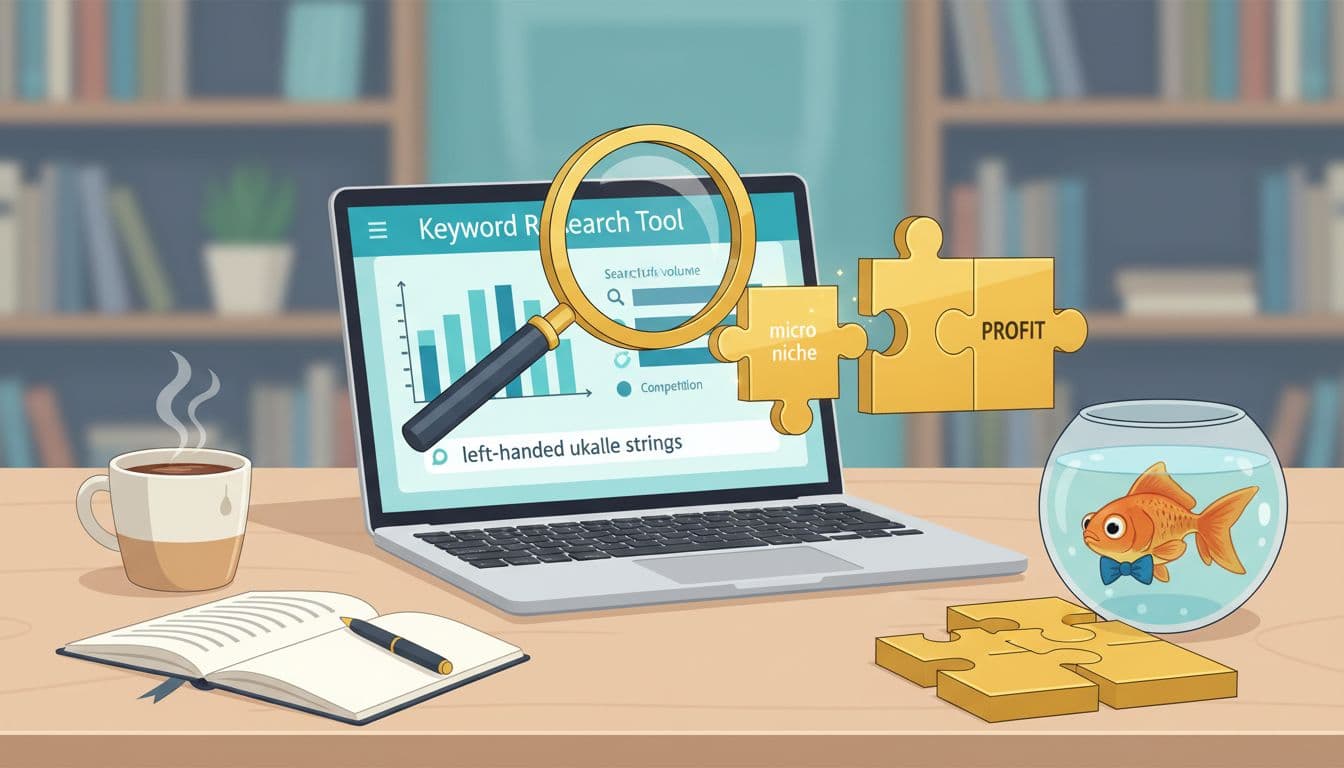
Most people fail with websites for one simple reason: they pick a topic that’s too big. They try to “compete with the internet,” then wonder why their posts get three views (two are them, one is their mom).
Micro niche sites win by doing the opposite. They pick a narrow slice of a market, then become the most helpful resource for that slice. Think “left-handed beginner golf wedges,” not “golf.” It’s less like opening a superstore, more like opening the one shop in town that always has the odd part people need.
This guide shows how to choose a tiny topic with real buying intent, how to score it quickly, and how to build the kind of trust Google and humans expect in 2026.
What “micro-niche” really means (and why it pays)
A micro-niche is a tight match of:
- a specific audience (who),
- a specific problem or goal (what),
- and a specific set of products or solutions (how).
Micro niches tend to pay because they attract visitors who already know what they want. They aren’t browsing for entertainment, they’re trying to solve something. That usually means higher clicks, higher conversion rates, and fewer “window shoppers.”
If you want proof that niche sites can still work, skim a few real-world niche site breakdowns and patterns at Nichehacks. The common thread is focus, not volume.
The 2026 rules: AI is common, trust is the moat
In January 2026, AI-assisted content is everywhere. That’s good news for speed, bad news for lazy sites.
To earn, micro niche sites need three things:
1) Experience signals (E-E-A-T)
People want proof you’ve actually used the thing or done the task. Add your own photos, test notes, comparisons, mistakes, and “what I’d do differently.”
2) Topical authority, not random posts
One great “topic cluster” beats 50 disconnected articles. Build a tight set of pages that cover the buyer journey end-to-end.
3) Intent-driven SEO
Write for what the searcher is trying to do: learn, compare, or buy. A “best X for Y” page serves a different intent than “how to choose X.”
For a sense of where search is headed this year, Moz’s expert roundup on 2026 SEO trends is a solid reality check.
A practical way to find micro-niches with buyer intent
Here’s a simple method that keeps you out of “hobby traffic” traps.
Step 1: Start with a painful problem (or expensive hobby)
Good micro-niches usually live in one of these buckets:
- Pain + urgency: discomfort, risk, deadlines (people pay to fix fast).
- Identity + pride: hobbies where gear matters (people pay to improve).
- Money + compliance: taxes, bookkeeping, rules (people pay to avoid trouble).
- Time-saving: busy people buying convenience.
Step 2: Add a specific audience label
Audience labels turn a wide niche into a micro-niche.
Examples of strong labels: seniors, new parents, left-handed, renters, shift workers, small nonprofits, Etsy sellers, bootcamp grads.
Step 3: Confirm “money exists” in the niche
You’re looking for signs like:
- multiple products with clear price ranges,
- affiliate programs or marketplaces with variety,
- ads showing up on key searches (a hint that others profit here),
- active communities where people ask purchase questions.
If you need broad inspiration to sanity-check demand, you can scan curated lists like Hostinger’s affiliate marketing niche ideas for 2026 and then narrow them down hard.
Micro-niche examples (with why they work and how they monetize)
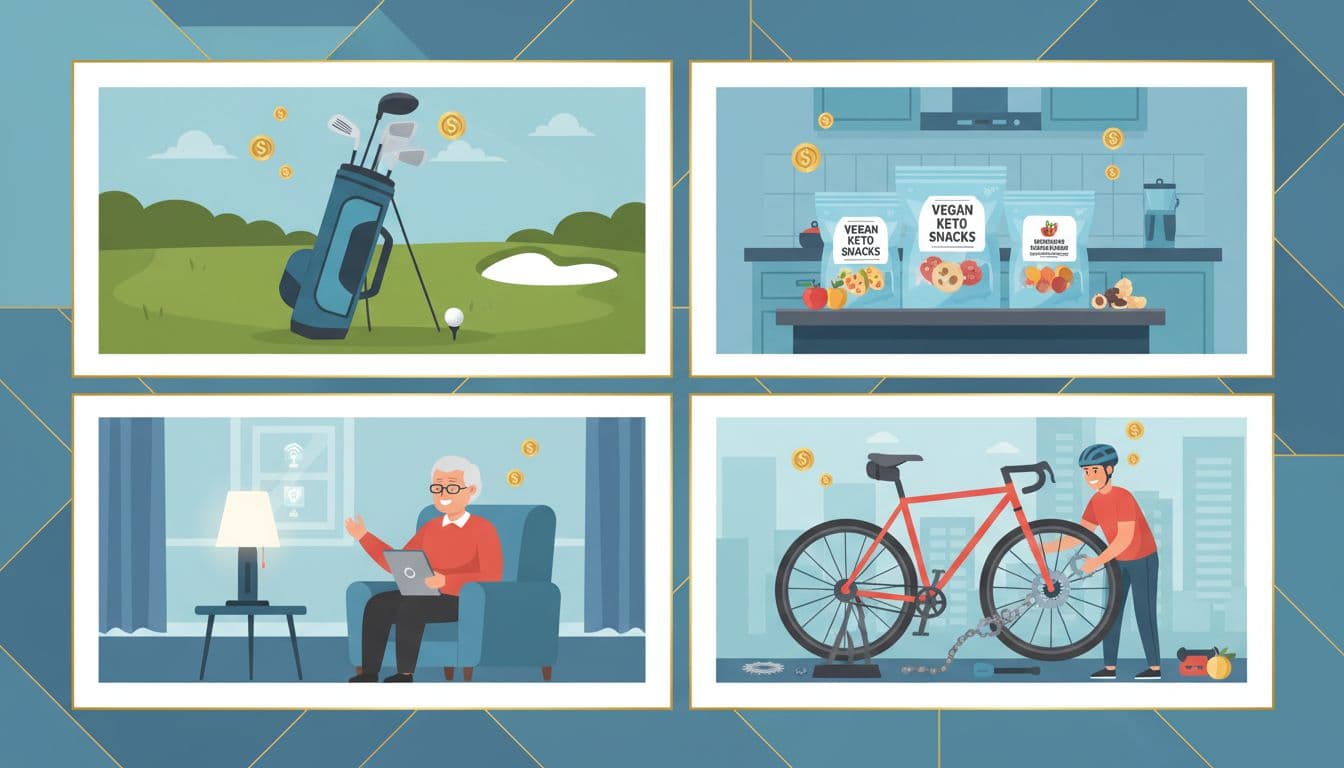
Below are five micro-niche angles across different industries. Each is small enough to own, but commercial enough to earn.
1) Left-handed golf training aids for beginners (sports)
Why it works: beginners buy gear and guidance, left-handed golfers want advice that fits them.
Monetization: affiliate links to training aids and lefty clubs, a beginner email course, lead gen for local lessons.
2) Vegan keto snacks for busy parents (food and lifestyle)
Why it works: strong constraints (vegan + keto + time), recurring purchases, easy content angles (school nights, travel).
Monetization: affiliate snack boxes, curated shopping lists as a paid download, brand sponsorships once traffic is steady.
3) Smart home safety devices for seniors living alone (home tech)
Why it works: safety is high intent, families research carefully, products have healthy price points.
Monetization: affiliate for sensors, medical alert alternatives, “setup guides” paired with recommended kits, paid consultation for device setup (local or remote).
4) Bookkeeping tools for Etsy sellers (business and finance)
Why it works: sellers earn money, hate paperwork, and will pay to stay organized.
Monetization: affiliate software, templates, mini-course, email funnel that recommends tools by store size.
5) Notion systems for freelance graphic designers (productivity)
Why it works: digital products are high margin, designers value workflow and client clarity.
Monetization: template sales, upsell coaching, affiliate tools (contracts, invoicing, storage).
If you want more “big picture” niche categories to narrow from, Neal Schaffer’s roundup of profitable blog niche ideas can help you pick a direction, then you zoom in until it feels almost too specific.
A simple niche scoring table (fast, honest, useful)

Score each category from 1 (weak) to 5 (strong). Total out of 25. Keep it strict, your future self will thank you.
| Micro-niche idea | Demand | Buyer intent | Competition | Content depth | Monetization | Total |
|---|---|---|---|---|---|---|
| Smart home safety devices for seniors | 4 | 5 | 3 | 4 | 4 | 20 |
| Bookkeeping tools for Etsy sellers | 4 | 5 | 3 | 4 | 4 | 20 |
| Notion systems for freelance designers | 3 | 4 | 4 | 4 | 5 | 20 |
| Left-handed golf aids for beginners | 3 | 4 | 3 | 3 | 4 | 17 |
Quick read: totals around 18 to 22 are often workable, if you can bring real experience and publish consistently.
Turn a tiny topic into a site that earns (without posting forever)
Once you’ve picked, the goal is not “more content.” It’s the right pages.
A starter plan that fits 2026 search and trust:
- One “hub” page: “Smart home safety devices for seniors” (what it is, who it’s for, how to choose).
- Three comparison pages: “best motion sensors for…” “best voice assistants for…” “best fall-detection alternatives…”
- Five problem-solvers: setup guides, troubleshooting, checklists, “what to avoid.”
- One proof page: your testing notes, photos, what you returned, what you kept (this builds trust fast).
Use AI to speed up outlines and drafts, then earn the click with your real details. If a goldfish can wear a tie and stay focused, you can write one helpful page a week.
Conclusion: small is how you get big
Micro niche sites still earn in 2026, but the easy wins are gone. The payout comes from focus, proof, and pages that match intent. Pick a tight topic you can explain clearly, publish like you mean it, and stack trust until you’re the obvious choice.
If you want out of your 9 to 5, don’t chase “everyone.” Chase the right “someone,” then become useful enough that they buy.
Pick-your-niche worksheet (copy/paste)
Niche idea (tiny on purpose):
Audience:
Main problem (pain, risk, or strong desire):
Money check:
What do people buy here (3 to 7 items)?
Average price range:
Any subscriptions or repeat buys?
Content fit:
3 “best X for Y” article ideas:
3 “how to” article ideas:
1 personal experience angle I can document:
Trust plan (E-E-A-T):
What can I test, photograph, or demo in 30 days?
What credentials or experience can I mention honestly?
Score it (1 to 5):
Demand:
Buyer intent:
Competition:
Content depth:
Monetization:
Total (out of 25):
Next action (one sentence):
By (date), I will publish my hub page and 2 supporting articles.

My Name Is Rafael Ferreras. I share practical tips, tools, and resources to help make building income online simpler and more approachable. I am a professional digital marketer with over 14 years of experience in the industry. My expertise is in email marketing and boosting conversions with bridge pages. I write about affiliate marketing and traffic generation.