
If you’ve ever stared at a blank screen thinking, “How am I supposed to write enough content to quit my job?”, you’re not alone. The trick isn’t writing more. It’s writing the right posts, on a schedule you can actually keep.
This affiliate content sprint is a 30-day plan to publish 15 posts aimed at buyer intent, the kind of searches people make when they’re close to pulling out their wallet. It’s January 2026, and attention is expensive. So we’re going to earn it by being useful and specific.
What makes a 30-day affiliate content sprint work
Think of this like meal prep for your blog. You’re not trying to cook a five-course dinner every night. You’re stocking the fridge with solid, repeatable basics, so future you can “serve” content consistently.
The sprint works because it forces three habits:
Consistency: 15 posts in 30 days builds momentum.
Focus: buyer-intent topics beat random “how to make money online” fluff.
Speed with standards: you ship, but you don’t publish junk.
You’ll publish about 3 to 4 posts per week. That’s ambitious, but it’s doable when the post types repeat.
Buyer intent, explained without the hype

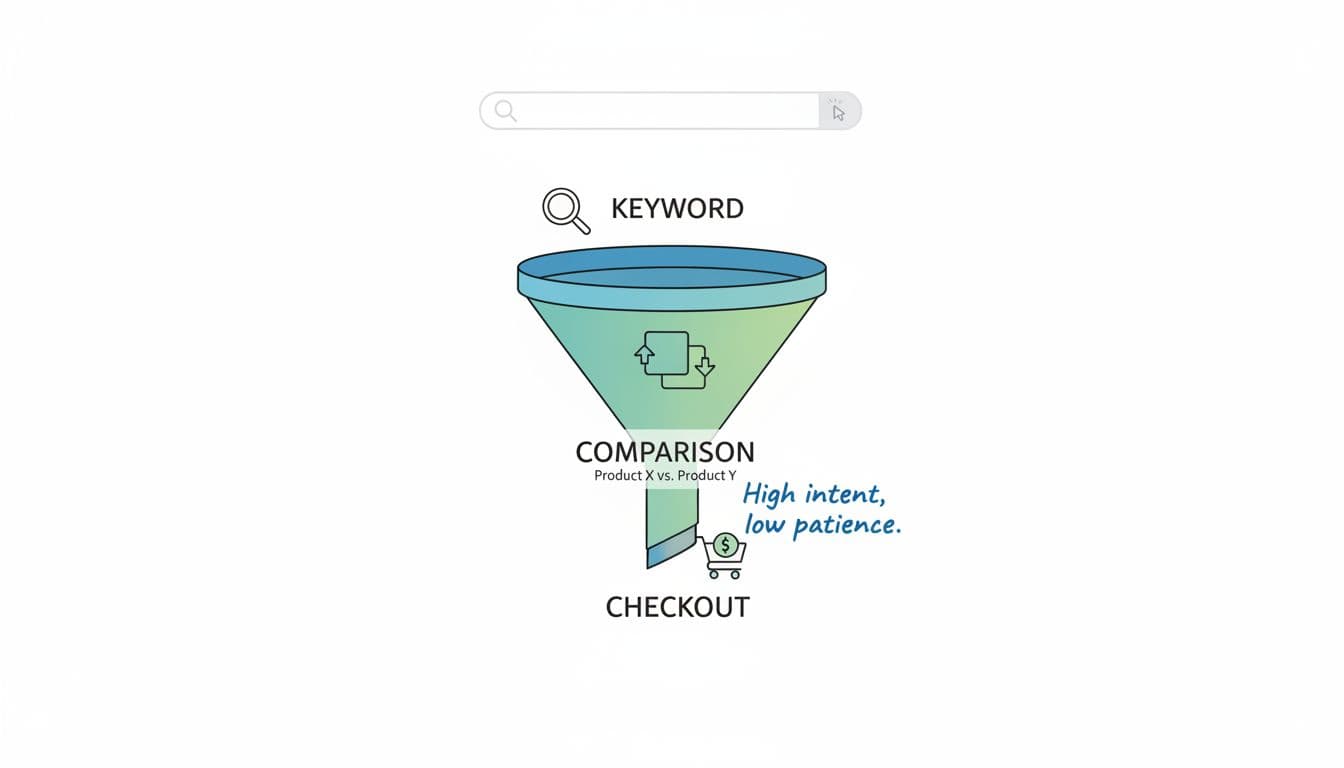
Buyer intent means the reader is comparing options, checking reviews, or looking for the “best” tool for a clear situation. These searches usually convert better than broad info posts because the reader already wants a solution.
Here are buyer-intent keyword patterns you can model (swap in your niche):
- “Best X for Y”: best email marketing tool for beginners, best budget standing desk for tall people
- “X vs Y”: ConvertKit vs MailerLite, Bluehost vs SiteGround
- “X review”: Systeme.io review, Surfer SEO review
- “X pricing” / “X discount”: (use carefully, and keep claims accurate)
- “Alternative to X”: alternative to ClickFunnels
- “Is X worth it?”: is Jasper worth it for bloggers
- “X for beginners”: best webinar platform for beginners
A quick gut-check: if a reader typed the keyword and landed on your post, would they expect a recommendation and a clear next step? If yes, it’s probably buyer intent.
Your 15-post blueprint (the simplest mix that sells)
To keep writing fast, use a repeatable mix. For 15 total posts:
- 6 posts: “Best X for Y” lists
- 5 posts: versus comparisons
- 4 posts: single product reviews
That balance gives you coverage and internal topic depth (without needing 100 posts first).
Sample post outlines (copy the structure, not the words)
Outline 1: “Product A vs Product B” (comparison)
- Who this comparison is for (and who should skip it)
- Quick verdict (1 paragraph)
- Feature-by-feature breakdown (only what matters to buyers)
- Pricing and real cost notes (include caveats)
- Ease of use for beginners
- Pros, cons, best fit
- Final recommendation and next step
Outline 2: “Best X for Y” (list)
- Define “Y” so readers self-qualify
- Your top picks (each with who it’s best for)
- How to choose (3 to 5 decision points)
- Common mistakes buyers make
- Your final pick for most beginners
Outline 3: “Product A review” (single review)
- What it is and what it’s not
- What you liked, what you didn’t
- Key features that change outcomes
- Pricing, refunds, and gotchas (only if confirmed)
- Who it’s best for (and alternatives)
- Bottom line recommendation
Time estimates per post (so you don’t lose your weekends)
Speed comes from planning the work, not “writing faster.” Use this baseline per post:
| Task | Time estimate |
|---|---|
| Keyword selection + angle | 20 to 30 minutes |
| Competitor scan (titles, sections, gaps) | 20 to 40 minutes |
| Outline | 20 to 30 minutes |
| Draft (1,200 to 1,800 words target, then trim) | 90 to 150 minutes |
| Edit for clarity + add affiliate links | 30 to 50 minutes |
| On-page basics (title, headings, meta, images) | 15 to 25 minutes |
| Publish + quick share | 10 to 20 minutes |
Total: about 3.5 to 5.5 hours per post. If that’s a lot, publish fewer days and batch more tasks. The sprint is a framework, not a punishment.
The 30-day publishing cadence (simple and repeatable)
Here’s a clean cadence that hits 15 posts without chaos:
| Week | Posts to publish | Suggested post types | Batch focus |
|---|---|---|---|
| Week 1 | 4 | 2 “Best”, 1 “vs”, 1 review | Build templates, set formatting |
| Week 2 | 4 | 2 “vs”, 1 “Best”, 1 review | Faster drafts, tighter intros |
| Week 3 | 4 | 2 “Best”, 2 “vs” | Add comparison tables where helpful |
| Week 4 | 3 | 1 “Best”, 1 “vs”, 1 review | Refresh, interlink, improve CTAs |
Publishing days (example): Mon, Wed, Fri, plus one flex day weekly. The flex day is your safety valve when life happens.
Weekly checklist (what to do, and when)
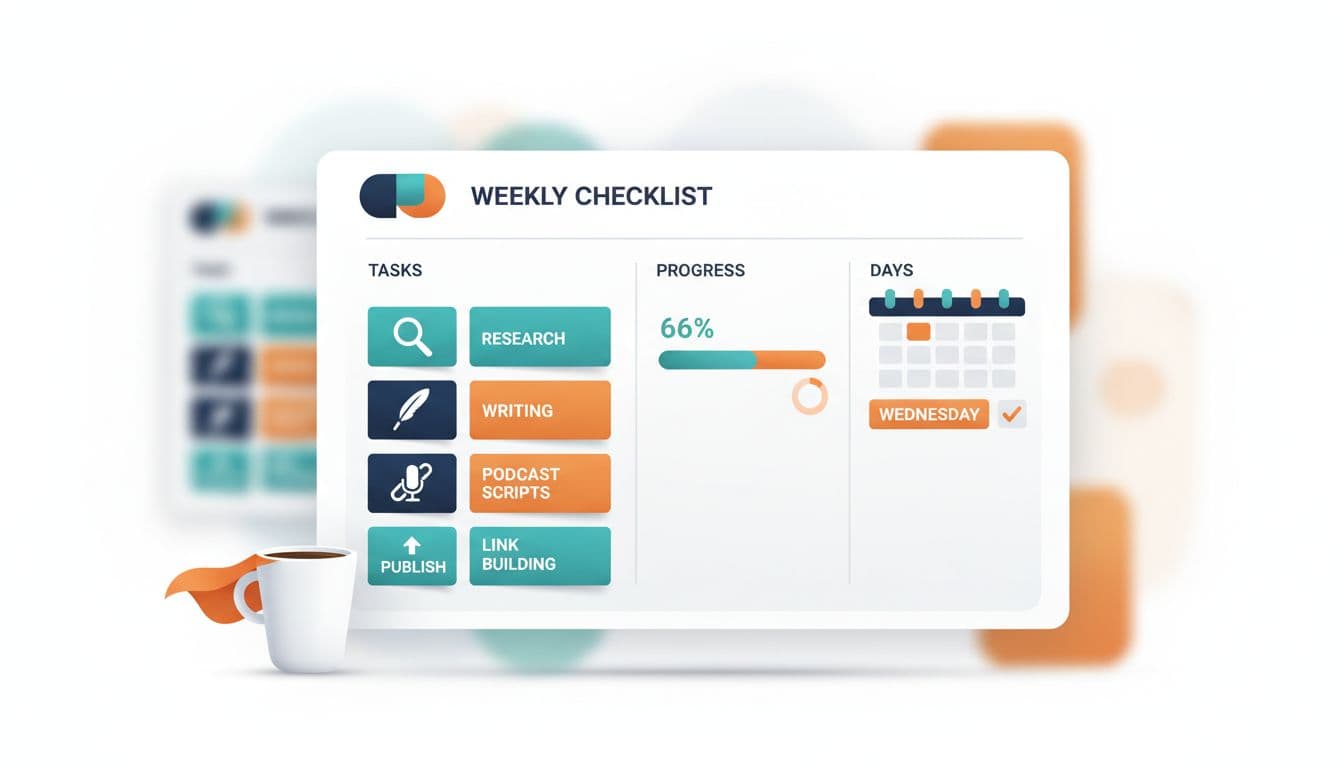
Week 1 checklist (setup week, still publish 4)
- Choose one niche lane for the month (1 hour)
- List 30 buyer-intent keywords, pick the best 15 (2 to 3 hours)
- Create 3 simple templates: review, vs, best-of (1 to 2 hours)
- Write and publish 4 posts (14 to 22 hours total)
Week 2 checklist (speed week)
- Batch outlines for 4 posts in one sitting (1.5 to 2 hours)
- Draft two posts back-to-back (3 to 5 hours)
- Add comparison points readers actually care about (30 minutes per post)
- Publish 4 posts and record what took longest (14 to 22 hours total)
Week 3 checklist (authority week)
- Add one “buyer helper” section to each post (use cases, mistakes, FAQs) (20 minutes per post)
- Tighten intros to 3 short paragraphs max (10 minutes per post)
- Publish 4 posts (14 to 22 hours total)
Week 4 checklist (finish strong)
- Publish the final 3 posts (10 to 16 hours total)
- Add 2 to 3 internal links between your sprint posts (45 to 60 minutes)
- Re-read the top 5 posts and fix confusing parts (1 to 2 hours)
- Make a simple “Start here” hub page draft for next month (optional) (1 to 2 hours)
Minimum viable post (MVP) quality checklist
Use this before you hit publish. If it passes, ship it.
- The intro states who the post is for in the first 5 lines
- The reader gets a clear recommendation (or clear criteria) by the top third
- Headings match what a buyer wants to know (price, fit, pros and cons)
- Claims are specific and not exaggerated
- The affiliate link is placed where it makes sense (not sprayed everywhere)
- The post answers the keyword, then adds one extra helpful angle
Affiliate disclosure best practices (non-legal advice)
A disclosure shouldn’t be hidden like a vegetable in a smoothie. Put it where readers will see it, usually near the top of the post, and keep it plain.
Good disclosure basics:
- Say you may earn a commission if they buy through your link
- Clarify it doesn’t change their price (only if true)
- Keep it consistent across reviews, comparisons, and “best” posts
- Avoid making income promises or guarantees
A simple line works: “This post contains affiliate links; I may earn a commission if you purchase through them.”
Conclusion: your next 30 days can change your next 12 months
A focused affiliate content sprint beats random posting because every article has a job: help a buyer decide. Publish 15 solid posts, learn what converts, then repeat the process with better data and faster writing.
Pick your 15 topics today, block the time, and treat publishing like training. The sprint doesn’t need you to be a genius, it needs you to be consistent. Start messy, finish published.

My Name Is Rafael Ferreras. I share practical tips, tools, and resources to help make building income online simpler and more approachable. I am a professional digital marketer with over 14 years of experience in the industry. My expertise is in email marketing and boosting conversions with bridge pages. I write about affiliate marketing and traffic generation.



1 thought on “The 30-Day Affiliate Content Sprint, publish 15 posts that target buyer intent (with a weekly checklist)”
Comments are closed.