
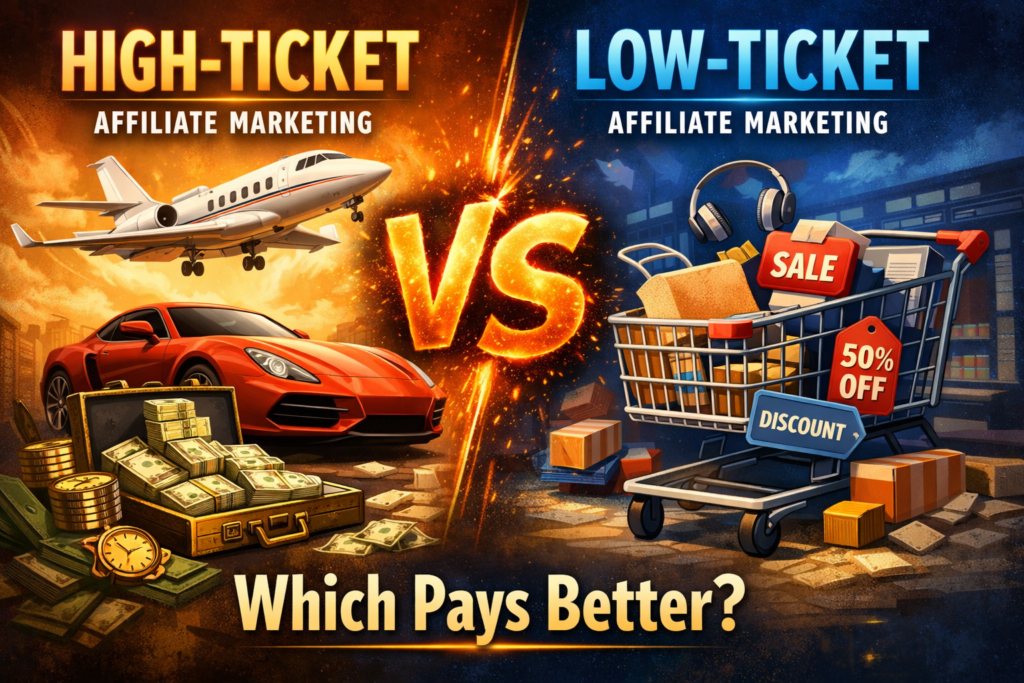
high ticket vs low ticket affiliate marketing can replace a 9-to-5, but the “ticket size” you promote changes everything. It affects how fast you get paid, how hard each sale feels, and how much content you need to publish before you see real momentum.
When people ask “which pays better,” they usually mean a mix of four things that shape earning potential: money per sale, total monthly income, time spent to earn it, and stress level while getting there. A $5 commission can feel fun until you realize you need hundreds of sales every month. A $500 commission can feel amazing until you realize the buyer needs time and trust.
Here’s the simple takeaway for the affiliate marketer: low-ticket is great for quick wins and fast learning, high-ticket can grow your income faster once your skills and trust are in place.
High-Ticket vs Low-Ticket Affiliate Marketing: What They Mean in Plain English
Low-ticket and high-ticket Affiliate Marketing are the same business model (you recommend, you earn a commission). The difference is the price of what you promote and the commission dollars per sale you get paid.
A common way to think about it:
- Low-ticket offers: Often under $100 (many are under $50).
- High-ticket offers: Often $500 to a few thousand dollars (sometimes more).
Commission rates can vary a lot. Some low-ticket programs pay a low commission percentage of 5% to 30%. Some high-ticket programs pay a flat fee like $200 per sale, or 20% to 50% of the price. So don’t obsess over the percent. Focus on the part that pays your bills: commission dollars per sale.
Both models serve different target audiences, can be digital or physical products, and both can be honest. The “best” offer is the one with solid product quality you’d feel good recommending to a friend, even if you made $0 from it.
Low-ticket offers: quick yes, smaller commissions
Low ticket affiliate offers convert faster because the buyer’s risk feels small, often turning into an impulse buy. Spending $19 or $49 is a quick decision. There’s less second-guessing, fewer conversations, and less need for deep proof.
Common low ticket affiliate offers examples:
- Ebooks and templates
- Budget-friendly tools and apps
- Small monthly subscriptions
- Simple courses priced under $100
- Physical products with low margins
- CPA offers
The trade-off is obvious: small commissions mean you need volume.
Mini math example (realistic, not hype):
- Offer price: $50
- Commission: 10% = $5 per sale
- Goal: $1,000 per month
- Sales needed: $1,000 ÷ $5 = 200 sales per month
Two hundred sales a month can happen, but it usually requires steady traffic (or a strong email list), lots of content, and patience while you build reach.
For a balanced overview of pros and cons, this breakdown is useful: low-ticket vs high-ticket affiliate marketing pros and cons.
High-ticket offers: fewer sales, bigger payouts
High ticket affiliate offers take longer to sell because the buyer is thinking harder. A $1,000 purchase can feel like a life choice. People want proof, details, comparisons, and often a few follow-up touches before they commit.
Common high-ticket examples:
- Premium online courses
- Coaching programs or masterminds
- High-end software (SaaS) for businesses
- Professional services (agencies, done-for-you setups)
- Expensive equipment in certain niches
Commissions often start around $100 per sale and can go much higher depending on the program.
Mini math example:
- Commission per sale: $500
- Goal: $2,500 per month
- Sales needed: $2,500 ÷ $500 = 5 sales per month
That’s the “5 sales vs 500 sales” moment many people miss. Even if high-ticket takes longer, you’re not chasing endless volume.
If you want examples of high-ticket programs and how brands position them, Shopify’s overview is a helpful reference: high-ticket affiliate marketing programs.
Which Pays Better, and When? A Realistic Earnings Breakdown
High-ticket usually pays better per sale with high commissions often starting at $100 or more. Low-ticket usually pays faster at the start, because it’s easier to get a “yes” from a cold audience.
The real difference is the sales cycle:
- Low-ticket sales cycle: Often minutes to a few days. People buy on impulse, or after one review.
- High-ticket items sales cycle: Often days to weeks (sometimes longer). People compare options, evaluate the value proposition due to the offer’s complexity, watch videos, read emails, and wait for the right time.
If you’re trying to quit your job, cash flow matters. Low-ticket can give you early proof that your links work and your content converts. High-ticket is what often moves people from “extra money” to “rent money.”
One more realistic point for January 2026: getting cheap clicks and tracking every buyer journey isn’t as easy as it used to be. Privacy changes and rising ad costs have made pure volume strategies tougher. That doesn’t kill low-ticket, but it raises the bar. High-ticket, with its focus on trust and education, lines up well with where online buying is heading.
Income math that makes the choice obvious
Here’s a clean comparison using simple numbers. These aren’t promises, just math. Note that high-ticket affiliate offers can also provide recurring monthly commissions for added long-term stability, boosting overall earnings potential.
Monthly income goalLow-ticket commission ($5)Sales neededHigh-ticket commission ($500)Sales needed$1,0002002$5,0001,00010
High-ticket shines here because of superior conversion rates; you can build a smaller, more focused audience and still hit meaningful income. Low-ticket can also get you there, but you’ll usually need a larger content library, more traffic sources, or both.
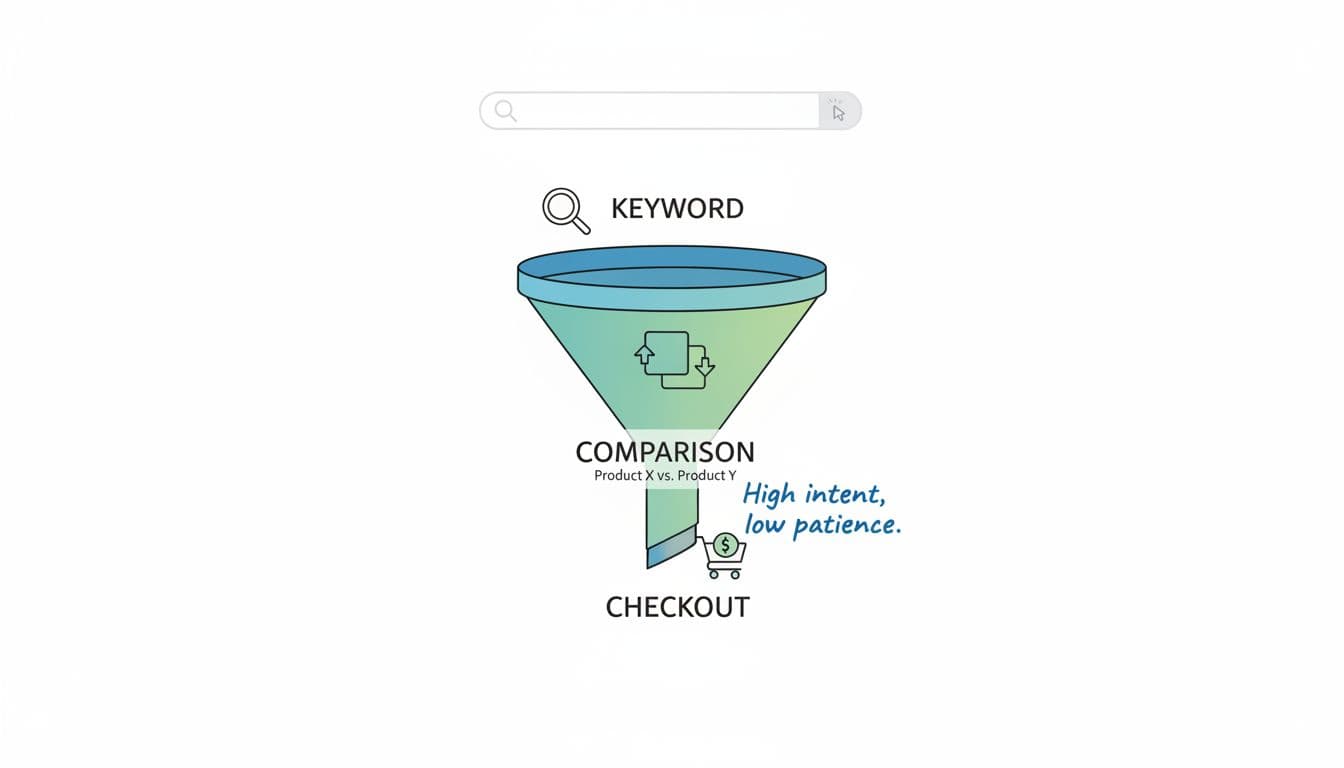
Traffic quality matters too. A targeted reader searching “best CRM for real estate teams” is worth more than 1,000 random scrollers. Your job in Affiliate Marketing is to match the right person to the right solution at the right time.
For a deeper look at the differences, including support and program structure, this guide lays it out clearly: high-ticket vs low-ticket affiliate programs key differences.
The hidden cost: traffic, time, and patience
Low-ticket often looks easier because it’s a quick sale, but it can quietly demand a lot from you.
With low-ticket, you typically need:
- More content, more often
- More reach (SEO, social, YouTube, short videos, or ads)
- Better tracking so you know what’s working
- More testing, because small changes can make or break volume
High-ticket can be calmer in a weird way. You may publish less often, but each piece needs to be stronger, especially when prioritizing targeted traffic for quality over quantity. You’re not just getting clicks, you’re building confidence.
With high-ticket, you typically need:
- Clear product experience (or at least strong research and honest positioning)
- Proof points (screenshots, demos, case studies, user stories)
- Follow-up (email, retargeting, or simple check-ins)
- Patience
It’s normal if your first high-ticket sale takes weeks or even months. That’s not failure, it’s the sales cycle doing what it does.
If you’re brand new and want a beginner-friendly view of high paying programs in the high-ticket approach, this overview is a solid starting point: mastering high-ticket affiliate marketing for beginners.
What’s Better for Beginners Who Want to Quit Their 9-5? Choose Your Best Path
Beginners who want to quit their 9-5 for a digital marketing career often get stuck because they try to do everything at once. As a new affiliate marketer, they promote five niches, ten offers, and three platforms, then wonder why nothing sticks.
You can mix low-ticket and high-ticket later, but for the next 60 to 90 days, pick one main lane. You’ll build faster because your message stays consistent.
Pick low-ticket if you need quick wins and practice
Low-ticket is a great training ground. You get feedback faster, which keeps motivation alive.
Low-ticket tends to fit you if:
- You want your first commissions fast, even if they’re small
- You’re still learning traffic, headlines, and basic writing
- You like the idea of many small sales adding up
- You don’t want to handle long buyer questions yet
One caution: low-ticket rewards focus. Promote a small set of offers in one niche. If you post about the weight loss niche today, crypto niche tomorrow, and dog training next week, your audience won’t know why you exist.
A simple approach is to pick:
- One target audience (example: busy parents)
- One problem (example: quick home workouts)
- One main offer (example: an affordable app or starter program)
Then build content that addresses their pain points and helps that person win small, real victories.
Pick high-ticket if you can build trust and follow up
High-ticket is a better fit when you’re ready to teach and guide, not just recommend. You’re selling fewer times, but each sale needs more confidence and sales skills behind it.
High-ticket tends to fit you if:
- You’d rather earn from fewer, bigger wins
- You’re willing to build trust through content and consistency
- You can follow up with email (or simple messaging)
- You’re OK with a slower start
What you must have for high-ticket to work:
- Honest pros and cons, not a sales pitch
- Strong reviews or comparisons
- A clear explanation of who it’s for (and who should skip it)
- A follow-up system, usually email
A simple trust plan:
- Teach the basics for free (posts, videos, simple guides).
- Share results or case studies, even small ones (your own or a documented user story).
- Recommend the high-ticket offer as the next step for serious people, such as an internet marketing course.
If you’re evaluating programs, this guide can help you avoid junk offers and pick something worth standing behind: how to choose the best high-ticket affiliate programs.
The Smart Hybrid Strategy: Start Low-Ticket, Level Up to High-Ticket
The hybrid path is one of the smartest affiliate marketing strategies and often the most sane option for beginners with limited time after work.
Low-ticket gets you moving. It helps you learn what content converts, which traffic sources fit your personality, and how to write calls-to-action that don’t feel awkward. Then high-ticket gives you the income horsepower when you’re ready.
Think of it like learning to drive in an empty parking lot before you hit the freeway.
A simple 3-step plan for the next 30 days
Step 1: Pick one problem and your target audience.
Make it narrow enough that your content feels personal. “People who want to make money” is too broad. “New parents trying to earn income at home” is clearer.
Step 2: Publish helpful content using solid copywriting, then pair it with one low-ticket offer.
Answer beginner questions. Show steps. Share what you tried. Add the low-ticket offer only when it fits the exact problem you’re talking about.
Step 3: Start an email list right away.
One simple opt-in is enough (a checklist, a short guide, or a mini email course). Send 1 to 2 helpful emails per week. Keep it plain, useful, and consistent.
This 30-day sprint is about building the habit, the assets, and a passive income stream, not chasing a perfect funnel.
Use your email list to turn interest into sales (without being pushy)
Email is the quiet engine behind both low-ticket and high-ticket Affiliate Marketing, but it’s extra important for high-ticket because it nurtures buyer intent as people need time to decide. Social posts disappear. Emails stack and build familiarity with high quality clients.
A basic email flow that works:
- Welcome email: What they’ll get from you, and what you stand for.
- Value emails: Quick wins, tips, checklists, and lessons.
- Story email: A real moment, a mistake you made, or tangible results.
- Recommendation email: A simple “here’s what I’d use” message, with clear who-it’s-for guidance.
Consistency beats perfection. One good email each week for six months will beat a burst of daily emails for two weeks, followed by silence. As an affiliate marketer, this approach creates lasting momentum.
Conclusion: So, Which Pays Better?
High-ticket Affiliate Marketing usually pays better long-term because the high commissions per sale for premium products are larger, you build trust comparable to selling luxury goods, and you don’t need endless volume to hit real income. Low-ticket can feel better short-term because it’s easier to get early sales and build confidence.
Pick one main path, such as high ticket affiliate offers or low ticket affiliate offers, for the next 60 to 90 days, track what happens, then adjust based on results. In high ticket vs low ticket affiliate marketing, your best model is the one you can stick with after a long workday.
If you want steady help as you build, join the mailing list to get simple tips, beginner-friendly strategies, and honest recommendations for your niche in making money online with Affiliate Marketing. No spam, unsubscribe anytime.

My Name Is Rafael Ferreras. I share practical tips, tools, and resources to help make building income online simpler and more approachable. I am a professional digital marketer with over 14 years of experience in the industry. My expertise is in email marketing and boosting conversions with bridge pages. I write about affiliate marketing and traffic generation.



2 thoughts on “High Ticket vs Low Ticket Affiliate Marketing: Which Pays Better?”
Comments are closed.